
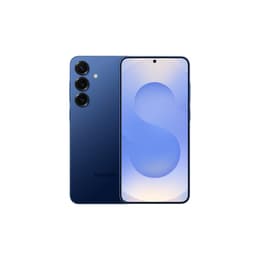

Galaxy A55 vs Galaxy S25+

Galaxy A55
Galaxy A55
Starting at

Refurbished price:A$339.00

Versus A$699.00 new

See options
Galaxy S25+
Galaxy S25+
Starting at

Refurbished price:A$919.00

Versus A$1,699.00 new

See options

The Samsung Galaxy A55 (released March 2024) and the Samsung Galaxy S25 Plus (released January/February 2025) are both Android smartphones from Samsung, yet they cater to different user expectations. While the Galaxy A55 offers a balanced experience with a focus on everyday usability and a strong battery, the Galaxy S25 Plus delivers flagship-tier performance, a more advanced camera system, and extended software support. Both devices run on Samsung's One UI over Android, providing a consistent user experience across the brand's ecosystem.

Scores

Durability

The longevity of a smartphone is influenced by its release timeline, software support, and repairability. These factors determine how long a device remains functional and secure for daily use.

  • Release Timeline and Software Support: The Galaxy A55, launched in March 2024, is promised four major Android OS updates and five years of security patches from its release date. It currently runs Android 15-based One UI 7.0 and is expected to receive Android 16 later in 2025. In contrast, the Galaxy S25 Plus, released in early 2025, benefits from Samsung's extended commitment, offering seven years of both OS and security updates. This means the S25 Plus will receive software support for a significantly longer period, extending its practical lifespan.
  • Repairability: The Galaxy A55 has a high repairability score of 8.5 out of 10, an improvement over its predecessor. This is attributed to design improvements such as fewer complex tools required for disassembly, easier part detachment, and the inclusion of a pull tab for battery removal. The Galaxy S25 Plus also demonstrates strong repairability, with a PBKreviews score of 9 out of 10, featuring an improved battery pull pouch and the use of standard Philips screws. This focus on repairability for both models suggests a commitment to extending device usability through maintenance.
  • Expected Practical Lifespan: Given its longer software support, the Galaxy S25 Plus is designed to remain current and secure for a more extended period, making it a suitable choice for users who prefer to keep their devices for many years. The Galaxy A55 still offers a respectable lifespan, particularly for users who typically upgrade their phones within a four to five-year cycle.

Release year

2024

2025

Operating system

Android

Android

Foldable

No

No

Performance

Performance is a key differentiator, impacting how smoothly applications run, how quickly tasks are completed, and the overall responsiveness of the device.

  • Processor Capabilities and Responsiveness: The Galaxy A55 is powered by an Exynos 1480 octa-core processor, which provides sufficient power for everyday tasks, web browsing, and casual gaming. Users generally report smooth daily usage with fast app opening and closing times. The Galaxy S25 Plus features a Qualcomm Snapdragon 8 Elite for Galaxy processor, built on a 3nm process, which delivers flagship-tier performance. This results in faster multitasking, smoother animations, and enhanced on-device AI capabilities, making it well-suited for demanding applications and intensive gaming.
  • Battery Behavior: The Galaxy A55 is equipped with a 5000mAh battery, which generally provides good battery life, often lasting a full day of heavy use or up to two days with moderate usage. Charging is supported at up to 25W. The Galaxy S25 Plus has a 4900mAh battery and offers excellent battery endurance, with some tests showing nearly 19 hours of web browsing and over 14 hours of video playback. It supports faster 45W wired charging, capable of reaching 70% in 30 minutes.
  • Storage and RAM: The Galaxy A55 comes with 8GB or 12GB of RAM and 128GB or 256GB of internal storage, with the added benefit of expandable storage via a microSD card. The Galaxy S25 Plus offers 12GB of RAM as standard, paired with 256GB or 512GB of internal storage, but it does not support expandable storage.

Memory (GB)

8 GB

12 GB

Screen quality

The display is a primary interface for smartphone interaction, and differences in technology, resolution, and brightness can significantly affect the viewing experience.

  • Display Technology and Resolution: Both devices feature vibrant AMOLED displays. The Galaxy A55 has a 6.6-inch Super AMOLED display with a 2340x1080 (FHD+) resolution. The Galaxy S25 Plus steps up with a 6.7-inch Dynamic AMOLED 2X display, offering a sharper 3120x1440 (QHD+) resolution. This higher resolution on the S25 Plus results in finer detail and crisper images.
  • Brightness and Refresh Rate: Both phones feature a 120Hz refresh rate, providing smooth scrolling and fluid animations. The Galaxy A55 offers a peak brightness of 1000 nits. The Galaxy S25 Plus boasts a significantly higher peak brightness of 2600 nits, which enhances outdoor visibility and HDR content viewing.
  • Screen Size and Protection: The Galaxy A55's 6.6-inch display provides ample screen real estate for media consumption and daily tasks. The Galaxy S25 Plus has a slightly larger 6.7-inch display. Both displays are protected by Gorilla Glass, with the A55 featuring Gorilla Glass Victus+ and the S25 Plus using Gorilla Glass Victus 2.

Resolution

1080x2340

1440x3120

Audiovisual

Camera capabilities are often a deciding factor for many users, with differences in sensor technology, lens configurations, and software processing influencing image and video quality.

  • Rear Camera System: The Galaxy A55 features a triple rear camera setup consisting of a 50MP main camera with Optical Image Stabilization (OIS), a 12MP ultrawide lens, and a 5MP macro lens. The 5MP macro camera is often considered less practical by users. The Galaxy S25 Plus also has a triple rear camera system, including a 50MP main camera with OIS, a 12MP ultrawide camera, and a 10MP telephoto lens with 3x optical zoom. The dedicated telephoto lens on the S25 Plus provides superior zoom capabilities compared to the A55's digital zoom.
  • Photography Performance: In good lighting, the Galaxy A55 delivers sharp and detailed photos with natural colors, and its Night Mode provides decent low-light performance for a mid-range device. The Galaxy S25 Plus produces excellent photos, particularly in daylight, with good detail and dynamic range, and handles low-light scenes well. While the S25 Plus camera hardware is similar to previous S-series models, it benefits from improved image processing.
  • Video Recording and Front Camera: Both phones support 4K video recording, with the A55 capable of 4K at 30fps from both front and main rear cameras. The S25 Plus can record 8K video at 30fps from its main camera and 4K at 60fps from its other lenses. The A55 has a 32MP front camera, while the S25 Plus features a 12MP front camera with autofocus, capturing clear and detailed selfies.

Miscellaneous

Beyond core performance and display, several practical features contribute to the overall user experience and device utility.

  • Connectivity and Ports: Both the Galaxy A55 and S25 Plus support 5G connectivity for fast mobile data. The A55 includes Wi-Fi 6 and Bluetooth 5.3, along with a USB Type-C 2.0 port. The S25 Plus also features modern Wi-Fi and Bluetooth standards, and a USB-C port. A notable difference is that the A55 offers expandable storage via a microSD card slot, a feature absent on the S25 Plus.
  • Security and Build Materials: Both devices incorporate in-display fingerprint sensors for biometric authentication. The Galaxy A55 features a glass and metal body with an IP67 rating for dust and water resistance. The Galaxy S25 Plus utilizes a recycled armor aluminum build, contributing to its durability.
  • Dimensions and Handling: The Galaxy A55 measures 161.10 x 77.00 x 8.20mm and weighs 213 grams. The Galaxy S25 Plus is slightly larger and heavier at 158.4 x 75.8 x 7.3mm and 190g (though one source lists 6.24 x 2.98 x 0.29 inches). User feedback for the A55 sometimes notes its size and weight, with some finding it a bit heavy.

Weight

213 oz

190 oz

Screen size (in)

6.6

6.7

Network

5G

5G

SIM card

Physical SIM

Physical SIM + eSIM

Carrier compatibility

Unlocked

Unlocked

User sentiment for the Galaxy A55 often highlights its solid battery life, smooth performance for daily tasks, and vibrant display as key strengths. Users appreciate its premium build quality for its segment and the inclusion of a microSD card slot. Common criticisms include its thick display bezels, a virtual proximity sensor that can be unreliable, and camera performance that, while dependable, doesn't match flagship devices. Some users also note that the speakers could be louder and that it lacks advanced features like Samsung DeX.

The Galaxy S25 Plus receives praise for its excellent battery life, exceptionally fast performance, and a bright, sharp display. Its extended software support policy is a significant advantage for long-term users. While its camera system is generally very good, some users feel it offers incremental improvements over previous generations rather than a major leap. Charging speed, while faster than the A55, is sometimes seen as not being the fastest compared to some competitors.

Users prioritizing long-term software support, top-tier performance for demanding applications and gaming, a sharper display, and a versatile camera system with optical zoom may find the Galaxy S25 Plus better suited to their needs. Conversely, users seeking a device with strong battery life, expandable storage, and reliable performance for everyday use, without the need for flagship-level processing power or advanced camera features, may lean toward the Galaxy A55. Both devices offer a quality-assured refurbished option, providing an eco-friendly alternative for consumers.


See all articles

Our recent comparisons