
Galaxy A35 vs Motorola Moto E32

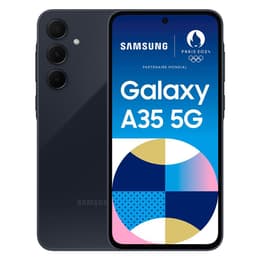
Galaxy A35
Galaxy A35
See options
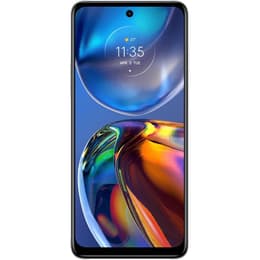
Motorola Moto E32
Motorola Moto E32
See options

The Samsung Galaxy A35 and the Motorola Moto E32 are smartphones designed for different user expectations and budgets. The Galaxy A35, released in March 2024, offers a more contemporary experience with a focus on display quality, camera capabilities, and extended software support. In contrast, the Moto E32, launched in May 2022, provides a more fundamental smartphone experience, prioritizing core functionalities and battery longevity.

Both devices operate on the Android platform, but they differ significantly in their software update commitments and overall hardware specifications, catering to distinct user needs.

Scores

Durability

The expected practical lifespan of these devices varies considerably due to their release timelines and manufacturer support policies.

  • Release Timeline: The Samsung Galaxy A35 was released in March 2024, making it a newer device compared to the Motorola Moto E32, which launched in May 2022. This difference in age directly impacts their remaining software support and overall longevity.
  • Software Longevity: The Galaxy A35 is committed to receiving four generations of Android OS upgrades and five years of security updates, ensuring a longer period of up-to-date software and security features. The Moto E32 launched with Android 11, and its update policy is typically more limited, meaning it will likely receive fewer major OS upgrades and security patches over its lifetime.
  • Repairability: The Samsung Galaxy A35 has a repairability score of 8.4 to 8.5 out of 10, indicating good component availability and ease of battery replacement. Information on the Moto E32's specific repairability score is less readily available, but its construction typically involves more adhesive, which can complicate repairs.

Release year

2024

2022

Operating system

Android

Android

Foldable

No

No

Performance

When evaluating performance, the Galaxy A35 offers a more robust experience for demanding tasks, while the Moto E32 is suited for everyday essentials.

  • Processor Capabilities: The Galaxy A35 is equipped with a 5nm processor, which allows for smoother multitasking, faster app loading, and more capable handling of graphically intensive applications and games. The Moto E32 features a 12nm processor, which is sufficient for basic daily tasks like web browsing and social media, but may exhibit slowdowns with more demanding apps or extensive multitasking.
  • Storage and RAM: The Galaxy A35 typically comes with 6GB or 8GB of RAM and 128GB or 256GB of internal storage, utilizing UFS 2.2 for faster data access. The Moto E32 usually offers 4GB of RAM and 64GB of internal storage, often with UFS memory, which is adequate for its intended use but less performant for heavy users. Both devices support expandable storage via microSD cards.
  • Battery Behavior: Both phones feature a 5000mAh battery. The Galaxy A35 provides approximately 1 to 1.5 days of use with moderate usage and around 7 hours of screen-on time. The Moto E32 can last 1 to 2 days with lighter usage, with some users reporting up to 5 days on standby. The Galaxy A35 supports 25W fast charging, while the Moto E32 supports 10W or 18W charging, with the Galaxy A35 taking about 1.5 hours for a full charge.

Memory (GB)

6 GB

4 GB

Screen quality

The visual experience differs significantly between the two devices, primarily due to their display technologies and resolutions.

  • Display Technology and Resolution: The Samsung Galaxy A35 features a 6.6-inch Super AMOLED display with Full HD+ resolution (2340x1080 pixels), offering vibrant colors, deep blacks, and sharp image clarity. The Motorola Moto E32 has a 6.5-inch IPS LCD screen with HD+ resolution (1600x720 pixels), providing a clear but less vibrant viewing experience compared to AMOLED.
  • Refresh Rate and Brightness: Both phones offer a 90Hz or 120Hz refresh rate, contributing to smoother scrolling and a more fluid user interface. The Galaxy A35's Super AMOLED panel can reach up to 1000 nits of brightness in High Brightness Mode (HBM) and includes Vision Booster for improved outdoor visibility. The Moto E32's IPS LCD panel has a lower peak brightness, which may affect visibility in direct sunlight.
  • Viewing Experience: The Galaxy A35 provides a more immersive and detailed viewing experience, well-suited for media consumption and detailed content. The Moto E32's screen is functional for everyday use, but users accustomed to higher resolution or OLED displays may notice the difference in sharpness and color reproduction.

Resolution

1080x2340

720 x 1600

Audiovisual

The camera systems on these smartphones cater to different levels of photography expectations.

  • Rear Camera System: The Samsung Galaxy A35 features a versatile triple-camera setup with a 50MP main sensor (with Optical Image Stabilization), an 8MP ultrawide lens, and a 5MP macro lens. This configuration allows for detailed photos, wider landscape shots, and close-up photography. The Motorola Moto E32 typically includes a 16MP main camera, a 2MP macro lens, and a 2MP depth sensor, providing basic photography capabilities.
  • Photography Performance: The Galaxy A35 generally produces vibrant and detailed images in good lighting conditions, with effective dynamic range and a capable Night mode for low-light scenarios. The Moto E32's camera performs adequately in well-lit environments but struggles more in low-light, often resulting in less detail and more noise.
  • Video Recording and Front Camera: The Galaxy A35 can record video at 4K resolution at 30 frames per second with both its main and front 13MP camera. The Moto E32 records video at 1080p at 30 frames per second, and features an 8MP front camera.
  • Audio Quality: The Galaxy A35 includes stereo speakers, offering a louder output, though bass levels could be improved. The Moto E32 typically features a single mono speaker, which is sufficient for basic audio but less rich for media consumption.

Miscellaneous

Beyond core features, several practical elements differentiate these two devices in daily use.

  • Connectivity and Ports: The Samsung Galaxy A35 supports 5G connectivity, offering faster mobile data speeds, and features Bluetooth 5.3 and a USB-C port. It does not include a 3.5mm headphone jack. The Motorola Moto E32 supports 4G LTE, has Bluetooth 5.0, a USB-C port, and retains a 3.5mm headphone jack. The Moto E32 lacks NFC, which means it cannot be used for contactless payments.
  • Build Materials and Durability: The Galaxy A35 features a glass front and back with a plastic frame, contributing to a more premium feel, and boasts an IP67 rating for dust and water resistance. The Moto E32 has a glass front, plastic frame, and plastic back, with an IP52 water-repellent design, offering basic protection against splashes.
  • Security and Design: The Galaxy A35 incorporates an in-display fingerprint sensor and face recognition for unlocking, along with Samsung Knox Vault for enhanced security. The Moto E32 uses a side-mounted fingerprint sensor and face unlock. The Galaxy A35 has dimensions of 161.7 x 78 x 8.2 mm and weighs 209g, while the Moto E32 measures 164 x 75 x 8.5 mm and weighs 184g.

Weight

209 oz

184 oz

Screen size (in)

6.6

6,5

Network

5G

4G

SIM card

Physical SIM + eSIM

Dual Physical SIM

Carrier compatibility

Unlocked

Unlocked

User sentiment for the Samsung Galaxy A35 often highlights its vivid display, reliable cameras in good lighting, and strong battery life as key strengths. Users appreciate its extended software support and premium design for its category. Some criticisms include occasional performance sluggishness with demanding tasks and slower charging speeds compared to some competitors.

For the Motorola Moto E32, common praise points revolve around its long battery life with light usage, a smooth 90Hz display for its class, and a generally clean Android experience. However, users frequently note its less powerful processor, which can lead to lag with heavier applications, and its more basic camera performance, especially in challenging lighting.

Users prioritizing a modern smartphone experience with a high-quality display, capable camera system, and long-term software updates may prefer the Samsung Galaxy A35. Its IP67 rating and more robust build also make it suitable for those seeking greater durability. Conversely, users who need a straightforward device for essential communication, web browsing, and media consumption, and who value a long-lasting battery without needing the latest performance or camera features, may find the Motorola Moto E32 to be a suitable option. It also retains the 3.5mm headphone jack, which can be a deciding factor for some.

Both devices, whether new or as quality-assured refurbished options, offer distinct advantages depending on individual priorities and usage patterns.

See all articles

Our recent comparisons