
Compare models

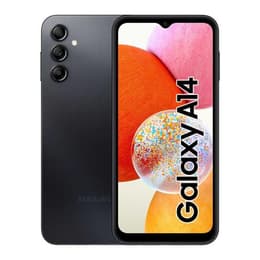
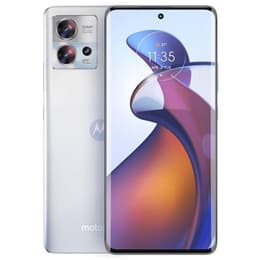
Galaxy A14 vs Motorola Edge 30 Fusion

  • 1-year warranty
  • Free standard shipping
  • Free 30-day returns
Galaxy A14
Starting at

Refurbished price:A$215.00

Versus A$390.00 new

See options

Differences at a glance

The Samsung Galaxy A14, released in 2023, and the Motorola Edge 30 Fusion, launched in 2022, are both Android smartphones that cater to different user priorities. While the Galaxy A14 focuses on delivering essential smartphone features, the Edge 30 Fusion aims for a more elevated experience with enhanced performance and display technology. Both devices operate on the Android platform, offering a familiar user interface, but they diverge significantly in their hardware capabilities and design philosophy.

Available Models

Colour

Storage (GB)

Scores

Durability

When considering the long-term usability of these devices, their release timelines and build quality play a significant role.

  • Software Longevity: The Samsung Galaxy A14, being a newer device, is expected to receive software updates for a slightly longer period, typically offering two major Android version upgrades and four years of security updates. The Motorola Edge 30 Fusion, released a year earlier, generally receives two major Android updates and three years of security patches, meaning its software support will conclude sooner.
  • Physical Durability: The Galaxy A14 features a plastic construction for its back and sides, with its front glass protection unspecified, though some variants may include Gorilla Glass. The Motorola Edge 30 Fusion presents a more robust build with a Gorilla Glass 5 protected front, a glass back, and an aluminum frame, contributing to a more premium feel. It also carries an IP52 rating, indicating a degree of dust and splash resistance, which the Galaxy A14 lacks.
  • Repairability: Both devices are designed with modern smartphone construction, and their repairability scores are generally in line with their respective segments. The choice of materials in the Edge 30 Fusion might make certain repairs more intricate compared to the more straightforward construction of the Galaxy A14.

Release year

2023

2022

Compatible with latest Update

No

Yes

Operating system

Android

Android

Foldable

No

No

Performance

The processing power and memory configurations of these two smartphones lead to distinct user experiences in terms of speed and responsiveness.

  • Everyday Responsiveness: The Galaxy A14 is equipped with processors designed for efficient handling of daily tasks, such as browsing, social media, and light applications. Users can expect smooth navigation for these common activities.
  • Demanding Applications and Multitasking: The Motorola Edge 30 Fusion, powered by a processor that was considered high-end at its release, delivers significantly faster performance. This translates to quicker app loading times, seamless multitasking with numerous applications open simultaneously, and a more fluid experience in graphically intensive games.
  • Storage and RAM: The Galaxy A14 typically comes with 4GB or 6GB of RAM and 64GB or 128GB of internal storage, which is suitable for average usage. The Edge 30 Fusion offers more generous configurations, often with 8GB or 12GB of RAM and storage options up to 512GB, providing ample space and memory for power users and extensive media libraries.

Screen quality

The visual experience on these devices differs considerably due to their display technologies and specifications.

  • Display Technology and Clarity: The Samsung Galaxy A14 features a 6.6-inch PLS LCD panel, offering clear visuals for general content consumption. The Motorola Edge 30 Fusion, on the other hand, boasts a 6.55-inch P-OLED display, which provides deeper blacks, higher contrast, and more vibrant colors, enhancing the viewing experience for videos and images.
  • Smoothness and Brightness: The Galaxy A14 offers a refresh rate of 60Hz or 90Hz, depending on the specific model, providing a reasonably smooth scrolling experience. The Edge 30 Fusion elevates this with a 144Hz refresh rate, resulting in exceptionally fluid animations and scrolling, which is particularly noticeable in fast-paced content and gaming. Its P-OLED display also typically achieves higher peak brightness, improving outdoor visibility and HDR content playback.
  • Design and Viewing Experience: The Edge 30 Fusion's display often features subtle curves on the sides, contributing to a more immersive feel and a higher screen-to-body ratio. Both devices offer Full HD+ resolutions, ensuring sharp text and detailed images.

Resolution

1080 x 2408

1080 x 2400

Screen type

PLS LCD

P-OLED

Audiovisual

The camera systems on both smartphones are designed to capture everyday moments, but they offer different levels of detail and versatility.

  • Main Camera Performance: Both devices feature a 50-megapixel main camera. The Motorola Edge 30 Fusion's main sensor benefits from optical image stabilization (OIS), which helps in reducing blur from handshakes, especially in lower light conditions, leading to clearer photos. The Galaxy A14's main camera relies on digital stabilization.
  • Ultrawide and Macro Capabilities: The Galaxy A14 includes a 5-megapixel ultrawide lens on its 4G variant, or a 2-megapixel depth sensor on its 5G variant, alongside a 2-megapixel macro camera. The Edge 30 Fusion offers a more capable 13-megapixel ultrawide camera that also doubles as a macro lens, providing more detailed wide-angle shots and close-ups.
  • Selfie Camera and Video Recording: For selfies, the Galaxy A14 has a 13-megapixel front camera. The Edge 30 Fusion features a higher-resolution 32-megapixel front camera, often with autofocus, which can result in sharper self-portraits. In terms of video, the Edge 30 Fusion supports recording up to 8K resolution at 30 frames per second or 4K at 60 frames per second, offering more advanced video capabilities compared to the Galaxy A14's 1080p at 30 frames per second.

Main camera

50 megapixels

50 megapixels

Front camera

13 megapixels

32 megapixels

Miscellaneous

Beyond the core specifications, several other features contribute to the overall user experience and convenience of these devices.

  • Battery and Charging: The Samsung Galaxy A14 is equipped with a larger 5000 mAh battery, which typically provides extended usage times. It supports 15W wired charging. The Motorola Edge 30 Fusion has a 4400 mAh battery, which, while smaller, is complemented by significantly faster 68W wired charging, allowing for quick power top-ups.
  • Connectivity and Ports: Both phones support 5G connectivity. The Galaxy A14 includes a 3.5mm headphone jack, a feature absent on the Edge 30 Fusion, which relies on its USB-C port for audio. The Edge 30 Fusion supports newer Wi-Fi 6E standards, offering potentially faster and more stable wireless connections compared to the Galaxy A14's Wi-Fi 5. Both devices feature Bluetooth 5.2.
  • Biometrics and Design: The Galaxy A14 uses a side-mounted fingerprint sensor for security. The Edge 30 Fusion incorporates an under-display optical fingerprint sensor, which is often perceived as a more modern and seamless integration. The Edge 30 Fusion is also notably thinner and lighter, contributing to a more comfortable in-hand feel.

Weight

201 oz

168 oz

Screen size (in)

6.6

6,55

Network

4G

5G

SIM card

Physical SIM

Dual Physical SIM

Carrier compatibility

Unlocked

Unlocked

What the community thinks

User feedback for the Samsung Galaxy A14 often highlights its strong battery life and reliable performance for essential daily tasks, making it a practical choice for users who prioritize longevity between charges. Some users appreciate its inclusion of a headphone jack and expandable storage. Criticisms sometimes point to its display technology and overall performance when handling more demanding applications.

The Motorola Edge 30 Fusion generally receives praise for its fluid display, premium design, and powerful performance, which makes it well-suited for gaming and heavy multitasking. Its fast charging capabilities are also a frequently lauded feature. However, some users have noted that its battery life, while decent, may not match the endurance of devices with larger capacities, especially under heavy usage. The absence of a headphone jack is also a point of consideration for some.

Users prioritizing extended battery life, a traditional headphone jack, and a straightforward smartphone experience for everyday communication and light media consumption may find the Samsung Galaxy A14 to be a suitable option. Conversely, individuals who value a highly responsive user interface, superior display quality for media consumption, faster charging, and robust performance for gaming or demanding applications will likely lean towards the Motorola Edge 30 Fusion. Both devices offer a gateway to the Android ecosystem, and considering a quality-assured refurbished option for either model can be an eco-friendly alternative to purchasing new.