
Motorola Edge 30 Fusion vs Oppo Find X5

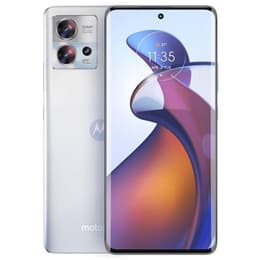
Motorola Edge 30 Fusion
Starting at

Refurbished price:A$257.46

Versus A$1,352.00 new

See options
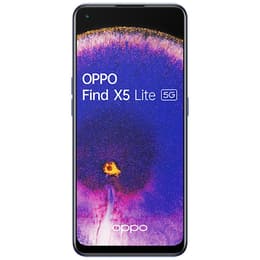
Oppo Find X5
Oppo Find X5
See options

The Motorola Edge 30 Fusion (released September 2022) and the Oppo Find X5 (released February 2022) are both Android smartphones that offer a blend of premium features. While both devices run on the Android operating system, they present different approaches to design, software experience, and camera capabilities. The Motorola Edge 30 Fusion emphasizes a high refresh rate display and a streamlined software experience, whereas the Oppo Find X5 focuses on camera innovation and a slightly larger battery capacity.

Scores

Durability

When considering the long-term usability of these devices, their release timelines and manufacturer software support policies are key factors.

  • Release Timeline: The Oppo Find X5 was released in February 2022, making it slightly older than the Motorola Edge 30 Fusion, which launched in September 2022. This difference in release date can impact the duration of future software support.
  • Software Longevity: Motorola typically provides two major Android OS updates and three years of security updates for its Edge series devices, meaning the Edge 30 Fusion has likely received Android 13 and Android 14, with security patches extending into 2025. Oppo, for its Find X5 series, generally offers three major OS updates and four years of security patches. This suggests the Find X5 could receive Android 15 and potentially Android 16, with security updates extending further than the Motorola.
  • Build and Practical Lifespan: Both phones feature glass fronts and aluminum frames, with the Oppo Find X5 using Gorilla Glass Victus for enhanced screen protection, while the Edge 30 Fusion uses Gorilla Glass 5. The Oppo Find X5 also carries an IP54 rating for dust and splash resistance, offering a degree of protection against everyday elements, whereas the Motorola Edge 30 Fusion has an IP52 water-repellent design. Users can expect a practical lifespan of several years from both devices, assuming typical usage and care.

Release year

2022

2022

Compatible with latest Update

Yes

Yes

Operating system

Android

Android

Foldable

No

No

Performance

Both smartphones deliver robust performance suitable for demanding applications and multitasking, though they achieve this with slightly different internal configurations.

  • Processing Power: Both devices are equipped with powerful processors from the same generation, enabling smooth operation across various tasks. The Motorola Edge 30 Fusion offers responsive performance for everyday use, handling demanding apps and gaming without significant slowdowns. The Oppo Find X5 also provides a fluid user experience, capable of running intensive applications and games effectively.
  • Multitasking and Storage: Both models are available with 8GB or 12GB of RAM, facilitating efficient multitasking and app switching. Storage options for the Motorola Edge 30 Fusion include 128GB, 256GB, and 512GB, while the Oppo Find X5 offers 128GB and 256GB. Neither device supports expandable storage via a microSD card.
  • Battery Behavior: The Motorola Edge 30 Fusion houses a 4400 mAh battery, which generally provides a full day of use for many users, even with its high refresh rate display. The Oppo Find X5 comes with a larger 4800 mAh battery, often lasting a full day and sometimes extending into a second day for moderate users. Both support fast wired charging, with the Edge 30 Fusion offering 68W charging and the Find X5 providing 80W charging. The Oppo Find X5 also supports wireless charging.

Memory (GB)

8 GB

8 GB

Screen quality

The display experience on both the Motorola Edge 30 Fusion and the Oppo Find X5 is characterized by vibrant colors and smooth visuals, though with some distinctions.

  • Display Technology and Clarity: The Motorola Edge 30 Fusion features a 6.55-inch P-OLED display, while the Oppo Find X5 uses a 6.55-inch AMOLED panel. Both technologies offer deep blacks and excellent contrast. Both displays have a resolution of 1080 x 2400 pixels, providing sharp and clear visuals for text and media.
  • Refresh Rate and Smoothness: The Edge 30 Fusion boasts a higher 144Hz refresh rate, contributing to exceptionally smooth scrolling and a responsive feel. The Find X5 offers a 120Hz refresh rate, which also provides a very fluid visual experience. For most users, the difference between 120Hz and 144Hz may be subtle.
  • Brightness and Viewing Experience: The Motorola Edge 30 Fusion can reach a peak brightness of up to 1100 nits, ensuring good visibility even in bright outdoor conditions. The Oppo Find X5 has a peak brightness of up to 1000 nits, which also delivers a bright and enjoyable viewing experience. Both displays support HDR10+ for enhanced color and dynamic range when viewing compatible content.

Resolution

1080 x 2400

1080 x 2400

Screen type

P-OLED

AMOLED

Audiovisual

Both smartphones offer capable camera systems, designed to capture detailed photos and videos in various conditions, with some differences in their configurations and features.

  • Rear Camera Systems: The Motorola Edge 30 Fusion features a triple camera setup with a 50 MP main sensor with optical image stabilization (OIS), a 13 MP ultrawide lens that also handles macro shots, and a 2 MP depth sensor. The Oppo Find X5 also has a triple rear camera array, including a 50 MP main sensor with OIS, a 50 MP ultrawide lens, and a 13 MP telephoto lens with 2x optical zoom.
  • Photography Performance: The main camera on the Edge 30 Fusion is noted for capturing detailed images with good color reproduction, performing well in various lighting, including low-light scenarios with its auto enhancement. The Oppo Find X5's main and ultrawide cameras are praised for producing sharp, vibrant, and detailed photos with natural colors, even in challenging lighting. The Find X5's telephoto lens offers optical zoom for distant subjects.
  • Video Recording and Audio: The Motorola Edge 30 Fusion is capable of recording video at up to 8K resolution at 30fps, and 4K at 30/60fps, with OIS assisting in stable footage. The Oppo Find X5 records up to 4K at 30/60fps. Both phones feature stereo speakers, with the Edge 30 Fusion including Dolby Atmos support for an enhanced audio experience.

Main camera

50 megapixels

50 megapixels

Front camera

32 megapixels

32 megapixels

Miscellaneous

Beyond core performance, several practical elements differentiate the user experience of these two devices.

  • Connectivity and Ports: Both phones support 5G connectivity for fast mobile data and include modern Wi-Fi standards (Wi-Fi 6E for Edge 30 Fusion, Wi-Fi 6 for Find X5) and Bluetooth 5.2. The Motorola Edge 30 Fusion features a USB Type-C 3.1 port, offering faster data transfer speeds compared to the Oppo Find X5's USB Type-C 2.0 port. Neither device includes a traditional 3.5mm headphone jack.
  • Biometrics and Sensors: Both smartphones incorporate an under-display optical fingerprint sensor for secure and convenient unlocking. They also offer face recognition capabilities.
  • Design and Handling: The Motorola Edge 30 Fusion is notably lighter at 168g and thinner at 7.5mm, contributing to a more compact and potentially easier-to-handle feel. The Oppo Find X5 weighs 196g and is 8.7mm thick. Both devices feature curved glass designs, with the Edge 30 Fusion having a glass front and back (Gorilla Glass 5) and an aluminum frame, while the Find X5 uses Gorilla Glass Victus on the front, a glass back, and an aluminum frame.

Weight

168 oz

196 oz

Screen size (in)

6,55

6.55

Network

5G

5G

SIM card

Dual Physical SIM

Dual Physical SIM

Carrier compatibility

Unlocked

Unlocked

The Motorola Edge 30 Fusion and Oppo Find X5 both present compelling options in the smartphone market, each with distinct strengths that cater to different user preferences. User feedback often praises the Edge 30 Fusion for its smooth 144Hz display, responsive performance, and sleek design. Some users appreciate its near-stock Android experience. Criticisms sometimes point to Motorola's update policy being less extensive than some competitors.

The Oppo Find X5 is frequently lauded for its strong camera performance, particularly its main and ultrawide sensors, and its reliable battery life with fast charging capabilities. Its premium build quality is also a common positive. Some users might find Oppo's ColorOS interface to be a more customized Android experience compared to Motorola's approach. The slightly older processor generation compared to some contemporaries at its launch was noted, though real-world performance remains strong.

Users prioritizing a very high refresh rate display and a lighter, thinner design with a clean Android interface may find the Motorola Edge 30 Fusion well-suited to their needs. Conversely, those who place a higher emphasis on advanced camera versatility, a slightly larger battery, and faster charging, along with potentially longer software support, might lean towards the Oppo Find X5. Both devices are available as quality-assured refurbished options, providing a sustainable choice for consumers looking to extend the lifecycle of electronic products.


See all articles

Our recent comparisons