

Galaxy Z Flip6 vs Oppo Reno 8

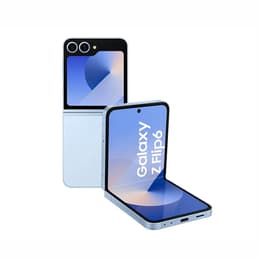
Galaxy Z Flip6
Galaxy Z Flip6
Starting at

Refurbished price:A$699.00

Versus A$1,649.00 new

See options
Oppo Reno 8
Oppo Reno 8
Starting at

Refurbished price:A$246.00

Versus A$1,159.00 new

See options

The Samsung Galaxy Z Flip6 and the Oppo Reno 8 represent distinct approaches to smartphone design and functionality. The Galaxy Z Flip6, released in July 2024, is a foldable smartphone that offers a compact form factor when closed, while the Oppo Reno 8, launched in May 2022, is a traditional slab-style device. These two Android phones cater to different user preferences, with the Z Flip6 focusing on innovative design and the Reno 8 on a balanced mid-range experience.

Scores

Durability

The expected lifespan and software support differ significantly between these two devices, largely due to their release timelines and product categories.

  • Release Timeline and OS Support: The Galaxy Z Flip6, being a more recent flagship device released in 2024, benefits from Samsung's commitment to extended software support, offering up to seven years of major operating system and security updates. In contrast, the Oppo Reno 8, launched in 2022, typically receives a shorter support window, generally around two to three years for OS updates and three to four years for security patches, which is common for its segment.
  • Physical Durability: The Z Flip6 features an armored aluminum frame and Gorilla Glass Victus 2 on its cover screen and back panel, along with an IP48 rating for water and dust resistance, meaning it can withstand submersion in fresh water and is protected against dust particles up to 1mm. Its foldable display, while advanced, requires careful handling, though the crease has been noted as less noticeable than previous generations. The Oppo Reno 8 has a traditional design with Corning Gorilla Glass 5 protection on its display and an IP54 rating, offering protection against dust and splashes of water from any direction.
  • Repairability: Traditional slab phones like the Oppo Reno 8 are generally considered more straightforward to repair than foldable devices due to their less complex internal structure. Foldable phones, including the Galaxy Z Flip6, often present greater challenges in terms of component accessibility and specialized parts.

Release year

2024

2022

Operating system

Android

Android

Foldable

Yes

No

Performance

Performance capabilities are a key differentiator, with the Galaxy Z Flip6 offering a more powerful processing experience compared to the Oppo Reno 8.

  • Processing Power: The Galaxy Z Flip6 is equipped with a current-generation flagship processor, enabling it to handle demanding applications, intensive multitasking, and graphic-heavy games with smooth responsiveness. This ensures a fluid user experience even under heavy load. The Oppo Reno 8, powered by a mid-range processor, provides capable performance for everyday tasks, social media, and moderate gaming, but may show limitations with the most resource-intensive applications.
  • Multitasking and Storage: The Z Flip6 typically comes with 12GB of RAM, facilitating seamless transitions between numerous open applications. It also offers larger internal storage options, up to 512GB, utilizing faster storage technology. The Oppo Reno 8 is available with 8GB or 12GB of RAM and up to 256GB of internal storage, which is sufficient for most users' needs.
  • Battery Behavior: The Galaxy Z Flip6 features a 4000mAh battery, which, combined with its efficient processor, aims to provide all-day power for many users, though heavy usage might require more frequent charging. It supports 25W wired and 15W wireless charging. The Oppo Reno 8 has a larger 4500mAh battery and supports significantly faster 80W wired charging, allowing for rapid power replenishment, though it lacks wireless charging capabilities.

Memory (GB)

12 GB

8 GB

Screen quality

The display technologies and user experiences offered by these two smartphones vary considerably, primarily due to their form factors.

  • Display Technology and Form Factor: The Galaxy Z Flip6 features a 6.7-inch Foldable Dynamic AMOLED 2X main display, which can fold in half for portability. This display offers vibrant colors, deep blacks, and a smooth 120Hz refresh rate. It also includes a 3.4-inch Super AMOLED cover display that allows for quick interactions and notifications without unfolding the device. The Oppo Reno 8 has a 6.43-inch flat AMOLED display with a 90Hz refresh rate, providing good color reproduction and contrast for a traditional smartphone experience.
  • Clarity and Brightness: Both devices offer Full HD+ resolutions, ensuring sharp visuals for text and media. The Z Flip6's main display has a resolution of 1080x2640 pixels, resulting in approximately 426 pixels per inch. The Reno 8's display has a resolution of 2400x1080 pixels with a pixel density of 409 ppi. The Z Flip6 boasts a higher peak brightness of 2600 nits, enhancing visibility in bright outdoor conditions. The Reno 8 offers a peak brightness of 800 nits, which is adequate for most indoor and outdoor viewing.
  • Viewing Experience: The Z Flip6's foldable nature provides a unique viewing experience, allowing for different usage modes like Flex Mode for hands-free viewing. The cover screen also offers expanded functionality for quick tasks. The Reno 8 provides a consistent, expansive viewing area typical of modern slab phones.

Resolution

1080 x 2640

1080x2400

Audiovisual

Both smartphones offer capable camera systems, but with different strengths and configurations tailored to their respective designs and target users.

  • Rear Camera Systems: The Galaxy Z Flip6 features a dual-camera setup on the rear, consisting of a 50MP wide-angle main sensor with optical image stabilization (OIS) and a 12MP ultrawide lens. This system is noted for capturing detailed photos with good dynamic range in well-lit conditions and improved video stabilization. The Oppo Reno 8 also has a 50MP main camera, utilizing a Sony IMX766 sensor with OIS, alongside an 8MP ultrawide and a 2MP macro lens. The Reno 8's main sensor is praised for its performance in various lighting conditions.
  • Front Camera and Video: The Z Flip6 has a 10MP front camera, but its foldable design allows users to utilize the higher-quality rear cameras for selfies, viewing themselves on the cover screen. It supports sharp 4K video recording at up to 60 frames per second. The Oppo Reno 8 features a 32MP front camera, which delivers clear selfies. It can record videos up to 4K at 30 frames per second.
  • Photography Performance: While the Z Flip6's camera is a significant improvement over its predecessors, some reviews suggest it may not match the absolute best non-foldable flagships in all scenarios, particularly in challenging low-light conditions or for portrait mode consistency. The Reno 8's camera system is considered strong for its segment, especially for everyday use and night photography, though its secondary lenses may offer less versatility.

Miscellaneous

Beyond the core specifications, several practical elements contribute to the overall user experience of these devices.

  • Connectivity and Ports: Both smartphones support 5G connectivity, ensuring access to faster mobile networks. The Galaxy Z Flip6 includes modern Wi-Fi standards (likely Wi-Fi 6E/7) and Bluetooth 5.3/5.4, along with a USB-C port. The Oppo Reno 8 supports Wi-Fi 6 and Bluetooth 5.3, also featuring a USB-C port. Neither device includes a traditional headphone jack.
  • Biometrics and Design: The Z Flip6 incorporates a side-mounted fingerprint sensor and face recognition for secure unlocking. Its design emphasizes a compact, foldable form factor with an armored aluminum frame and a less noticeable screen crease. The Reno 8 features an in-display fingerprint sensor and face unlock. Its design is a more conventional slab style, with a slim profile and a weight of 179 grams.
  • Dimensions and Handling: When unfolded, the Galaxy Z Flip6 measures 165.1 x 71.9 x 6.9mm and weighs 187 grams, offering a full-sized smartphone experience. Its ability to fold in half makes it highly portable. The Oppo Reno 8 measures 160.0 x 73.4 x 7.67mm and weighs 179 grams, providing a comfortable grip for a non-foldable device.

Weight

187 oz

200 oz

Screen size (in)

6.7

6,43

Network

5G

5G

SIM card

Physical SIM + eSIM

Dual Physical SIM

Carrier compatibility

Unlocked

Unlocked

User sentiment for the Samsung Galaxy Z Flip6 often highlights its innovative foldable design and the convenience of a compact form factor. Users appreciate the improved battery life compared to previous Flip models and the enhanced camera capabilities, particularly the ability to use the main camera for high-quality selfies via the cover screen. Criticisms sometimes point to the camera performance not fully matching that of top-tier non-foldable flagships in all conditions, and the wired charging speed being slower than some competitors. The cover screen, while functional, is sometimes noted for having limited capabilities compared to some rivals.

For the Oppo Reno 8, common praise revolves around its solid all-day battery life and exceptionally fast 80W wired charging, which is a significant convenience for users. Its AMOLED display and capable main camera are also frequently mentioned as strong points for its segment. Some users have noted that the overall camera performance, particularly the secondary lenses, might not be as versatile as higher-end devices, and the design, while sleek, can be uncomfortable to hold for extended periods without a case.

Users prioritizing a cutting-edge, compact design with extended software support and a versatile camera system that leverages its unique form factor may find the Galaxy Z Flip6 well-suited to their needs. Those who value a larger battery with very fast charging, a reliable everyday performance, and a traditional smartphone experience may lean towards the Oppo Reno 8. Both devices offer distinct advantages, and for those considering an eco-friendly alternative, quality-assured refurbished options for both models can provide a sustainable choice.

See all articles

Our recent comparisons