
Galaxy Z Flip6 vs Motorola Edge 30 Fusion

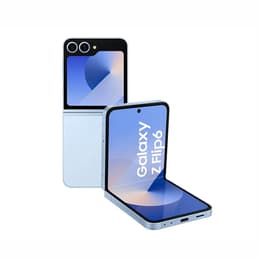
Galaxy Z Flip6
Galaxy Z Flip6
Starting at

Refurbished price:A$699.00

Versus A$1,649.00 new

See options
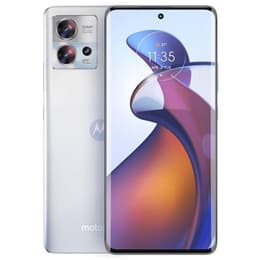
Motorola Edge 30 Fusion
Starting at

Refurbished price:A$257.46

Versus A$1,352.00 new

See options

The Samsung Galaxy Z Flip6, released in July 2024, and the Motorola Edge 30 Fusion, launched in September 2022, represent distinct approaches to smartphone design and functionality. The primary differentiator lies in their form factor: the Z Flip6 offers a foldable clamshell design, while the Edge 30 Fusion maintains a traditional slab profile. These differences extend to their core specifications, influencing user experience and suitability for various needs. Both devices operate on the Android platform, though with different software versions and update timelines.

Scores

Durability

The expected practical lifespan of a smartphone is significantly influenced by its release timeline and the manufacturer's commitment to software support.

  • Release Timeline: The Galaxy Z Flip6, being a 2024 release, benefits from a more recent launch, positioning it further along its software support cycle compared to the Motorola Edge 30 Fusion, which debuted in 2022. This two-year difference means the Z Flip6 will receive major Android operating system updates and security patches for a longer duration.
  • Software Longevity: Samsung has committed to providing seven years of major OS and security updates for the Galaxy Z Flip6, offering extended software longevity. The Motorola Edge 30 Fusion, having launched with Android 12, has received subsequent updates, but its overall support period will be shorter than that of the Z Flip6.
  • Physical Durability: The Galaxy Z Flip6 features an enhanced armored aluminum frame and Gorilla Glass Victus 2 protection on its cover screen and back panel, along with an IP48 rating for water and dust resistance. Its inner foldable display uses ultra-thin glass (UTG) and has a less noticeable crease. The Motorola Edge 30 Fusion, with its traditional design, incorporates an aluminum frame and Gorilla Glass 5 for its display, offering an IP52 rating for splash and dust resistance. Users report the Z Flip6's inner screen protector can show scratches at lower Mohs levels, a characteristic of foldable displays, while the outer screen is more resilient.

Release year

2024

2022

Compatible with latest Update

Yes

Yes

Operating system

Android

Android

Foldable

Yes

No

Performance

Performance in both devices is driven by capable processors, though the generational gap impacts overall responsiveness and handling of demanding tasks.

  • Processing Power: The Galaxy Z Flip6 is equipped with a current-generation processor, enabling it to handle demanding applications, intensive multitasking, and graphic-heavy gaming with smooth and efficient performance. This newer architecture also contributes to improved thermal management, allowing for sustained high performance. The Motorola Edge 30 Fusion, featuring a previous-generation flagship processor, still delivers a responsive experience for everyday use, app loading, and moderate gaming, but may show limitations when faced with the most intensive workloads over extended periods.
  • Multitasking and Storage: The Z Flip6 typically comes with 12 GB of RAM, facilitating seamless transitions between numerous open applications and efficient background processes. It offers storage options up to 512 GB. The Edge 30 Fusion is available with 8 GB or 12 GB of RAM and storage options up to 512 GB, providing ample space for applications and media, though its storage is not expandable.
  • Battery Behavior: The Galaxy Z Flip6 houses a 4000 mAh battery, which, combined with its efficient processor, provides improved battery life, with many users reporting it lasts through a full day of moderate to heavy use. The Motorola Edge 30 Fusion features a 4400 mAh battery, and users generally find its battery performance to be good, often lasting a full day.

Memory (GB)

12 GB

8 GB

Screen quality

The display experience differs significantly between these two devices, primarily due to the Z Flip6's foldable nature and the distinct panel technologies.

  • Display Technology and Clarity: The Galaxy Z Flip6 features a 6.7-inch Dynamic AMOLED 2X main display, known for its deep blacks, vibrant colors, and excellent contrast. Its resolution of 1080x2640 pixels ensures clear and sharp visuals for typical viewing. The Motorola Edge 30 Fusion sports a 6.55-inch pOLED display with a 1080x2400 pixel resolution, also offering strong colors and contrast.
  • Brightness and Refresh Rate: The Z Flip6's main display can reach a peak brightness of 2600 nits, providing excellent visibility even in bright outdoor conditions, and supports a 120 Hz refresh rate for smooth scrolling and animations. The Edge 30 Fusion offers a 144 Hz refresh rate, which contributes to a very fluid visual experience, and a peak brightness of around 1100 nits, making it well-suited for outdoor use.
  • Form Factor and Viewing Experience: The Z Flip6's foldable design allows for a compact form factor when closed, revealing a large, immersive screen when unfolded. The crease on the main screen is less noticeable than in previous generations, though still present. It also includes a 3.4-inch Super AMOLED cover display for quick interactions. The Edge 30 Fusion's traditional flat display offers a consistent viewing area without a crease, and its curved edges contribute to a sleek aesthetic.

Resolution

1080 x 2640

1080 x 2400

Screen type

Foldable Dynamic LTPO AMOLED 2X

P-OLED

Audiovisual

Both smartphones offer capable camera systems, with the Z Flip6 benefiting from newer sensor technology and the Edge 30 Fusion providing a versatile setup for its class.

  • Rear Camera Systems: The Galaxy Z Flip6 features a dual-camera setup with a 50 MP main sensor with optical image stabilization (OIS) and a 12 MP ultra-wide-angle lens. This configuration is noted for capturing detailed images with accurate exposure and good dynamic range in well-lit environments, and offers improved low-light performance and video stabilization. The Motorola Edge 30 Fusion includes a triple-camera system with a 50 MP main sensor (OIS), a 13 MP ultra-wide-angle lens, and a 2 MP depth sensor. Its main camera produces detailed photos with good color reproduction, and it can record video up to 8K resolution.
  • Low-Light and Video Performance: The Z Flip6 shows improvements in low-light photography and offers strong video stabilization, particularly from its main camera. While generally performing well, some users have noted occasional inconsistencies in portrait mode and visible noise in very challenging low-light conditions. The Edge 30 Fusion's main camera also performs well in low light with its dedicated night mode, and its video recording capabilities are robust, with good colors and dynamic range.
  • Front Camera and User Experience: The Z Flip6 allows users to utilize its high-quality main rear cameras for selfies via the cover screen, offering a superior selfie experience compared to many traditional front-facing cameras. The Edge 30 Fusion is equipped with a 32 MP front-facing camera, which captures detailed selfies and handles exposure well.

Main camera

50 megapixels

50 megapixels

Front camera

10 megapixels

32 megapixels

Miscellaneous

Beyond core performance, several practical elements contribute to the overall user experience and differentiate these two devices.

  • Connectivity and Ports: Both devices support 5G connectivity and Wi-Fi 6 (ax) for fast wireless internet. The Galaxy Z Flip6 features Bluetooth 5.3 and a USB-C 3.2 port, offering faster data transfer speeds. The Motorola Edge 30 Fusion comes with Bluetooth 5.2 and a USB-C 3.1 port. Both include NFC for contactless payments.
  • Biometric Security: For secure unlocking, the Galaxy Z Flip6 incorporates a side-mounted fingerprint sensor, while the Motorola Edge 30 Fusion features an under-display fingerprint sensor. Both also offer face recognition capabilities.
  • Design and Handling: The Galaxy Z Flip6's defining characteristic is its foldable design, allowing it to become significantly more compact when closed, enhancing portability. When unfolded, it presents a slim profile. The Motorola Edge 30 Fusion, with its traditional slab design, is noted for its slim and lightweight form factor, making it comfortable to hold. The Z Flip6 also integrates Galaxy AI features, offering enhanced software functionalities.

Weight

187 oz

168 oz

Screen size (in)

6.7

6,55

Network

5G

5G

SIM card

Physical SIM + eSIM

Dual Physical SIM

Carrier compatibility

Unlocked

Unlocked

User sentiment for the Samsung Galaxy Z Flip6 often highlights its significantly improved battery life, enhanced camera system, and increased durability compared to its predecessors. Many appreciate the less noticeable crease on the main display and the integration of new AI features. However, some users express that the cover screen's functionality, while improved, still feels somewhat limited compared to competitors, and that the camera, while good, may not match the absolute best non-foldable flagships in all scenarios. The foldable form factor itself remains a key draw, offering unique portability and usage modes, though it still presents some inherent compromises compared to traditional smartphones.

The Motorola Edge 30 Fusion is frequently praised for offering a premium feel and strong performance for its class, particularly its vibrant 144 Hz pOLED display and capable main camera. Users generally appreciate its near-stock Android experience and good battery life. Criticisms sometimes point to the less impressive ultra-wide and depth cameras, and its IP52 rating offers less robust protection than some competitors. Despite being an older model, it is often seen as a well-rounded device that delivered flagship-level experiences at the time of its release.

Users prioritizing a compact, innovative form factor with extended software support and the latest processing power will find the Galaxy Z Flip6 well-suited to their needs. Its improved battery and camera make it a strong contender in the foldable segment. Conversely, those who prefer a traditional smartphone design with a high refresh rate display, solid everyday performance, and a generally good camera system, and who are comfortable with a device from an earlier release cycle, may lean towards the Motorola Edge 30 Fusion. Both devices can be excellent choices, and considering a quality-assured refurbished option for either model can be a sustainable way to acquire these technologies.


See all articles

Our recent comparisons