
Galaxy S25 Ultra vs Nokia X30

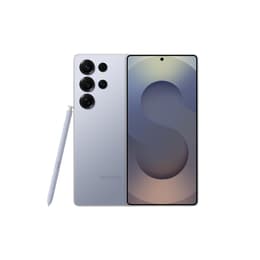
Galaxy S25 Ultra
Galaxy S25 Ultra
Starting at

Refurbished price:A$1,094.00

Versus A$2,149.00 new

See options
Nokia X30
Nokia X30
Starting at

Refurbished price:A$299.00

Versus A$965.00 new

See options

The Samsung Galaxy S25 Ultra, released in February 2025, and the Nokia X30, launched in September 2022, are distinct smartphones catering to different user expectations. While the Galaxy S25 Ultra represents a premium flagship experience with advanced features and a focus on high-end performance, the Nokia X30 offers a more streamlined approach, emphasizing durability and essential smartphone functionalities. Both devices operate on the Android platform, but their software support timelines and hardware capabilities diverge significantly.

Scores

Durability

The practical lifespan and software support differ considerably between these two devices, influencing their long-term usability.

  • Release Timeline: The Galaxy S25 Ultra is a much newer device, released in February 2025, while the Nokia X30 was launched in September 2022. This nearly two-and-a-half-year difference in release dates directly impacts their remaining support cycles.
  • Software Longevity: Samsung promises an extensive seven years of Android OS and security updates for the Galaxy S25 Ultra, meaning it is expected to receive updates up to Android 22 and remain viable into 2032. In contrast, the Nokia X30 is guaranteed three years of OS upgrades and three years of monthly security patches from its release, extending its support until around late 2025 or early 2026.
  • Build and Durability: The Galaxy S25 Ultra features a titanium body and glass back with Corning Gorilla Armor 2 protection, offering enhanced durability and scratch resistance. The Nokia X30 emphasizes sustainability with a 100% recycled aluminum frame and a 65% recycled plastic back, protected by Corning Gorilla Glass Victus on its display. Both devices offer water and dust resistance, with the Nokia X30 rated at IP67, capable of submersion in up to 1 meter of water for 30 minutes.

Release year

2025

2022

Operating system

Android

Android

Foldable

No

No

Performance

Performance capabilities are a key differentiator, with the Galaxy S25 Ultra designed for demanding tasks and the Nokia X30 for everyday use.

  • Processing Power: The Galaxy S25 Ultra is equipped with a current-generation, high-performance processor, enabling smooth operation for intensive applications, advanced multitasking, and graphically demanding games. The Nokia X30 utilizes a mid-range processor, which capably handles daily tasks, web browsing, and moderate gaming, providing a responsive experience for general use.
  • Multitasking and Storage: The Galaxy S25 Ultra offers substantial RAM options, typically 12GB or 16GB, supporting extensive multitasking without slowdowns and comes with generous internal storage options up to 1TB. The Nokia X30 provides 6GB or 8GB of RAM, suitable for managing several applications concurrently, and offers internal storage up to 256GB.
  • Battery Behavior: The Galaxy S25 Ultra houses a 5000mAh battery, supporting 45W fast charging and wireless charging, designed to power its advanced features through extended use. The Nokia X30 features a 4200mAh battery with 33W fast charging, aiming for up to two days of battery life under typical usage conditions.

Memory (GB)

12 GB

8 GB

Screen quality

The display experience varies significantly, with the Galaxy S25 Ultra offering a more expansive and visually rich panel.

  • Display Technology and Size: The Galaxy S25 Ultra features a large 6.9-inch Dynamic LTPO AMOLED 2X display, providing vibrant colors, deep blacks, and excellent contrast. The Nokia X30 has a 6.43-inch AMOLED PureDisplay, which also delivers bright colors and good contrast, offering a clear viewing experience.
  • Resolution and Brightness: The Galaxy S25 Ultra boasts a QHD+ resolution (3120x1440 pixels), resulting in exceptionally sharp images and text, with a peak brightness of up to 2600 nits for superior outdoor visibility. The Nokia X30 offers an FHD+ resolution (1080x2400 pixels) and a peak brightness of 700 nits, providing clear visuals and adequate brightness for most environments.
  • Refresh Rate and Protection: Both devices feature a smooth refresh rate, with the Galaxy S25 Ultra offering an adaptive 120Hz and the Nokia X30 a 90Hz refresh rate, contributing to fluid scrolling and responsiveness. The Galaxy S25 Ultra's display is protected by Corning Gorilla Armor 2, which includes anti-reflective properties, while the Nokia X30 uses Corning Gorilla Glass Victus.

Resolution

1440x3120

1080 x 2400

Audiovisual

Camera capabilities present a notable distinction, with the Galaxy S25 Ultra offering a more versatile and high-resolution system.

  • Rear Camera System: The Galaxy S25 Ultra features a comprehensive quad-camera setup, including a 200MP main sensor with optical image stabilization (OIS), a 50MP ultrawide lens, a 50MP telephoto lens with 5x optical zoom, and a 10MP telephoto lens with 3x optical zoom, providing extensive photographic flexibility and detail. The Nokia X30 comes with a dual-camera system, comprising a 50MP main sensor with OIS and a 13MP ultrawide lens, designed for clear everyday photography.
  • Photography Performance: The Galaxy S25 Ultra excels in various lighting conditions, capturing detailed images with natural colors and strong dynamic range, particularly noted for its zoom capabilities and low-light performance. The Nokia X30 performs well in good lighting, producing images with accurate colors, and its Night Mode 2.0 enhances low-light shots, though some users note a narrower dynamic range in certain conditions.
  • Video and Audio: The Galaxy S25 Ultra supports high-resolution video recording up to 8K at 30fps and 4K at 120fps, with robust stabilization and advanced audio capture. The Nokia X30 records video at 1080p at 30 or 60fps, and features OZO Spatial Audio capture with wind noise reduction for improved sound quality in recordings.

Miscellaneous

Beyond core specifications, several practical elements contribute to the overall user experience of each device.

  • Connectivity and Ports: Both smartphones support 5G connectivity, Wi-Fi, and Bluetooth, ensuring modern wireless communication. The Galaxy S25 Ultra features a USB-C port, while the Nokia X30 also uses USB Type-C for charging and data transfer. The Nokia X30 also includes NFC for contactless payments.
  • Biometrics and Sensors: Both devices incorporate an in-display fingerprint sensor for secure unlocking. The Galaxy S25 Ultra also supports the S Pen, offering additional functionality for note-taking and navigation.
  • Physical Attributes: The Galaxy S25 Ultra is larger and heavier, measuring 162.8 x 77.6 x 8.2 mm and weighing 218g, reflecting its expansive display and premium build. The Nokia X30 is more compact and lighter at 158.9 x 73.9 x 7.99 mm and 185g, making it easier to handle for some users.

Weight

218 oz

185 oz

Screen size (in)

6.9

6.43

Network

5G

5G

SIM card

Physical SIM + eSIM

Dual Physical SIM

Carrier compatibility

Unlocked

Unlocked

User sentiment for the Galaxy S25 Ultra often highlights its exceptional display, robust performance for demanding tasks, and versatile camera system, particularly its zoom capabilities. Users appreciate its comprehensive feature set and long-term software support. Some criticisms include its size and weight, and some users on Reddit felt that while it ticks all flagship boxes, it didn't offer "mind-blowing" innovation compared to its predecessors. The Nokia X30 is frequently praised for its solid build quality, eco-friendly materials, and reliable everyday performance. Its camera is generally considered good for its segment, especially in good lighting, and its software update commitment is a positive for many. However, some users have noted the absence of 4K video recording and a processor that might struggle with future demanding applications over its lifespan.

Users prioritizing a cutting-edge smartphone with a large, vibrant display, top-tier camera versatility, and extended software longevity will find the Samsung Galaxy S25 Ultra well-suited to their needs. Its advanced processing power and S Pen functionality make it ideal for power users, content creators, and those who value the latest technology. Conversely, users who prioritize a more compact, environmentally conscious device with reliable performance for daily tasks, a good camera for general use, and a commitment to software updates will likely lean towards the Nokia X30. It serves as a practical choice for individuals seeking a dependable smartphone experience without the most advanced features. Both devices, when considered as quality-assured refurbished options, offer an eco-friendly alternative for consumers.


See all articles

Our recent comparisons