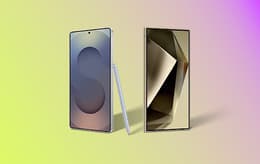
Galaxy S25 Ultra vs Motorola Edge 30 Pro

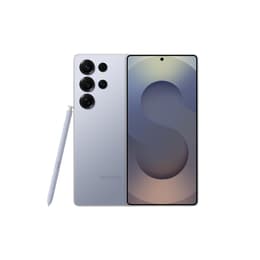
Galaxy S25 Ultra
Galaxy S25 Ultra
Starting at

Refurbished price:A$1,094.00

Versus A$2,149.00 new

See options
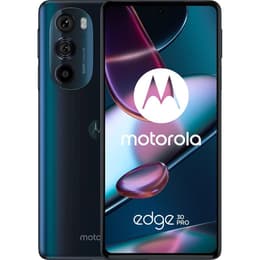
Motorola Edge 30 Pro
Starting at

Refurbished price:A$289.72

Versus A$2,709.00 new

See options

The Samsung Galaxy S25 Ultra, released in February 2025, and the Motorola Edge 30 Pro, launched in March 2022, represent different generations of Android smartphones. While both devices offer a premium experience, the Galaxy S25 Ultra introduces a more advanced camera system, a higher-resolution display, and extended software support, reflecting its newer release. Both operate on the Android platform, though with different versions and custom user interfaces.

Scores

Durability

The expected lifespan and software support differ significantly between these two devices, primarily due to their respective release dates.

  • Software Longevity: The Samsung Galaxy S25 Ultra launched with Android 15 and is guaranteed to receive seven years of Android OS upgrades, extending its software support until approximately Android 22, along with seven years of security updates. This commitment ensures the device remains current and secure for an extended period. In contrast, the Motorola Edge 30 Pro, released with Android 12, was promised two major OS upgrades (up to Android 14) and three years of bi-monthly security updates.
  • Physical Durability: The Galaxy S25 Ultra features a robust build with Gorilla Glass Armor 2 on the front and a titanium frame, offering enhanced resistance to drops and scratches, alongside an IP68 rating for significant water and dust resistance. The Motorola Edge 30 Pro utilizes Gorilla Glass 3 for its display and Gorilla Glass 5 for its back, with a plastic frame, and carries an IP52 rating, indicating protection against dust and splashes.
  • Practical Lifespan: Users prioritizing long-term software updates and advanced physical durability will find the Galaxy S25 Ultra designed for a more extended practical lifespan. The Motorola Edge 30 Pro, while durable for its time, offers a shorter window of guaranteed software and security updates.

Release year

2025

2022

Operating system

Android

Android

Foldable

No

No

Performance

Performance capabilities are a key area of distinction, influenced by the generational gap in their internal components.

  • Processing Power: The Samsung Galaxy S25 Ultra is equipped with a current-generation octa-core processor, specifically optimized for its ecosystem, enabling it to handle demanding applications, intensive multitasking, and advanced AI features with fluidity. The Motorola Edge 30 Pro, featuring a flagship processor from its release year, delivers strong performance for everyday tasks and gaming, though it may show its age when running the most graphically intensive applications or future software.
  • Multitasking and Storage: The Galaxy S25 Ultra typically comes with 12GB of RAM, with some regions offering a 16GB option, supporting extensive multitasking and smooth transitions between numerous open applications. It offers internal storage options up to 1TB, catering to users with large media libraries or extensive app collections. The Edge 30 Pro is available with 8GB or 12GB of RAM and storage options up to 512GB, providing ample space and efficient multitasking for most users.
  • Battery Behavior: The Galaxy S25 Ultra houses a 5000 mAh battery, designed to provide extended usage on a single charge, complemented by 45W wired fast charging and wireless charging capabilities. The Motorola Edge 30 Pro features a 4800 mAh battery, offering reliable all-day power for moderate use, with exceptionally fast 68W wired charging and 15W wireless charging.

Memory (GB)

12 GB

8 GB

Screen quality

Both devices offer high-quality displays, but with differences in resolution, technology, and overall viewing experience.

  • Display Technology and Clarity: The Samsung Galaxy S25 Ultra features a 6.9-inch Dynamic LTPO AMOLED 2X display with a QHD+ resolution (3120 x 1440 pixels), delivering exceptionally sharp images and vibrant colors. It also includes ProScaler technology, which enhances lower-resolution content for a clearer viewing experience. The Motorola Edge 30 Pro sports a 6.7-inch pOLED display with a Full HD+ resolution (1080 x 2400 pixels), providing good clarity and deep blacks.
  • Brightness and Smoothness: The Galaxy S25 Ultra's display can reach up to 2600 nits of peak brightness, ensuring excellent visibility even in bright outdoor conditions, and offers an adaptive refresh rate from 1Hz to 120Hz for smooth scrolling and power efficiency. The Edge 30 Pro boasts a 144Hz refresh rate, providing a very fluid visual experience, particularly noticeable during scrolling and gaming, with good brightness for typical indoor and outdoor use.
  • Viewing Experience: Users prioritizing the highest resolution, peak brightness, and advanced upscaling technology will find the Galaxy S25 Ultra's display more immersive. Those who value an ultra-smooth refresh rate for general navigation and gaming will appreciate the Edge 30 Pro's display.

Resolution

1440x3120

1080 x 2400

Audiovisual

The camera systems on these smartphones reflect their respective flagship aspirations, with the newer device offering more advanced capabilities.

  • Rear Camera Versatility: The Samsung Galaxy S25 Ultra features a comprehensive quad-camera setup, including a 200 MP main sensor, a 50 MP ultrawide lens, a 10 MP telephoto lens with 3x optical zoom, and a 50 MP periscope telephoto lens offering 5x optical zoom and 10x optical quality zoom. This system provides extensive zoom capabilities and high-resolution capture. The Motorola Edge 30 Pro offers a triple camera system with a 50 MP main sensor (with OIS), a 50 MP ultrawide sensor (also capable of macro shots), and a 2 MP depth sensor.
  • Photography and Video Quality: The Galaxy S25 Ultra benefits from a ProVisual Engine with AI enhancements for adaptive scene optimization and noise reduction, delivering detailed and vibrant photos in various conditions, including low light. It supports 8K video recording at 30 fps and 10-bit HDR video. The Edge 30 Pro's 50 MP main camera produces good photos with natural color reproduction and dynamic range, even in lower light conditions due to pixel binning. It also supports 8K video recording at 24/30 fps.
  • Front Camera and Audio: For selfies and video calls, the Galaxy S25 Ultra has a 12 MP front-facing camera with autofocus. The Edge 30 Pro features a high-resolution 60 MP front camera. Both devices offer capable microphone quality for calls and recording, and stereo speakers for media consumption.

Miscellaneous

Beyond core performance, several practical features and design elements differentiate these two smartphones.

  • Connectivity and Ports: The Samsung Galaxy S25 Ultra supports the latest connectivity standards, including 5G, Wi-Fi 7, and Bluetooth 5.4, along with a USB 3.2 Type-C port. The Motorola Edge 30 Pro also offers 5G connectivity, Wi-Fi 6E, and Bluetooth 5.2, with a USB 3.1 Type-C port. Neither device includes a traditional 3.5mm headphone jack.
  • Biometrics and Design: The Galaxy S25 Ultra integrates an ultrasonic in-screen fingerprint sensor and supports the S Pen for enhanced productivity. Its design features a titanium frame and Gorilla Glass Armor 2, contributing to a premium feel and durability. The Edge 30 Pro utilizes a side-mounted fingerprint sensor integrated into the power button. It has a glass back and a plastic frame, offering a comfortable grip.
  • Dimensions and Handling: The Galaxy S25 Ultra measures 162.8 x 77.6 x 8.2 mm and weighs 218g, making it a substantial device. The Edge 30 Pro is slightly taller and thicker at 163.1 x 75.95 x 8.8 mm but lighter at 196g, which can impact one-handed use and portability.

Weight

218 oz

196 oz

Screen size (in)

6.9

6,7

Network

5G

5G

SIM card

Physical SIM + eSIM

Dual Physical SIM

Carrier compatibility

Unlocked

Unlocked

The Samsung Galaxy S25 Ultra and Motorola Edge 30 Pro cater to different user expectations, largely influenced by their release timelines and target markets. The Galaxy S25 Ultra, as a more recent flagship, is often praised for its comprehensive camera system, particularly its versatile zoom capabilities and AI-enhanced photography. Users frequently highlight its vibrant, high-resolution display and the long-term commitment to software updates as significant advantages. Some common observations might include its larger size and weight, which some users find substantial.

The Motorola Edge 30 Pro, while an older flagship, received positive remarks for its smooth 144Hz OLED display and its strong performance for its generation. Users appreciated its fast wired charging and the near-stock Android experience. However, some criticisms noted its camera performance, while good, might not match the absolute top-tier devices, and its software update policy was less extensive compared to some competitors.

Users prioritizing the latest technological advancements, a highly versatile camera system with extensive zoom, a top-tier display, and a long period of software support will find the Samsung Galaxy S25 Ultra well-suited to their needs. This device is ideal for professionals, content creators, or anyone seeking a cutting-edge smartphone experience with long-term viability. Conversely, users who value a very smooth display for everyday interactions, solid performance for general use, and exceptionally fast charging, and who may not require the absolute latest camera features or the longest software support, may lean toward the Motorola Edge 30 Pro. Both devices, when considered as quality-assured refurbished options, offer an eco-friendly alternative for consumers looking to make informed and sustainable choices.

See all articles

Our recent comparisons