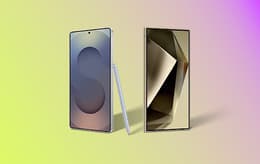
Galaxy S24 vs Motorola Edge 30 Fusion

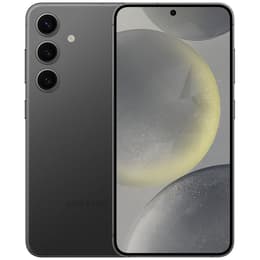
Galaxy S24
Galaxy S24
Starting at

Refurbished price:A$622.00

Versus A$1,841.10 new

See options
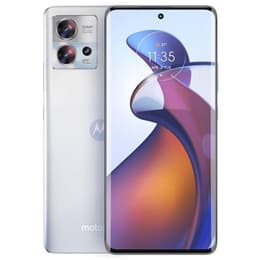
Motorola Edge 30 Fusion
Starting at

Refurbished price:A$257.46

Versus A$1,352.00 new

See options

The Samsung Galaxy S24, released in January 2024, and the Motorola Edge 30 Fusion, launched in September 2022, are both Android smartphones offering distinct user experiences. While the Galaxy S24 represents a more recent flagship offering with extended software support and advanced display technology, the Edge 30 Fusion provides a compelling package with a high refresh rate screen and a capable processor from a previous generation. Both devices run on the Android operating system, with Samsung's One UI overlay and Motorola's near-stock Android approach.

Scores

Durability

When considering the practical lifespan of these devices, their release timelines and software support policies are key differentiators.

  • Release Timeline: The Samsung Galaxy S24 was released in January 2024, making it a significantly newer device compared to the Motorola Edge 30 Fusion, which launched in September 2022. This difference in age directly impacts their remaining support cycles.
  • Software Longevity: The Galaxy S24 offers an industry-leading commitment of seven years of OS and security updates, meaning it is expected to receive updates until 2031. In contrast, the Motorola Edge 30 Fusion was promised two major OS updates and three years of security updates, having already received Android 13 and Android 14 from its initial Android 12 release. This means the Galaxy S24 will maintain software currency for a considerably longer period.
  • Durability Features: The Galaxy S24 features an Armor Aluminum frame and Corning Gorilla Glass Victus 2 for display protection, along with an IP68 rating for dust and water resistance. The Motorola Edge 30 Fusion utilizes a metal and glass design with Corning Gorilla Glass 5 on the front and is splash and dust resistant, though it lacks a formal IP rating.

Release year

2024

2022

Compatible with latest Update

Yes

Yes

Operating system

Android

Android

Foldable

No

No

Performance

The performance capabilities of these smartphones are influenced by their respective processors and system optimizations, affecting how smoothly they handle daily tasks and demanding applications.

  • Processing Power: The Samsung Galaxy S24 is equipped with a current-generation octa-core processor (Snapdragon 8 Gen 3 in some regions, Exynos 2400 in others), providing robust performance for intensive applications and multitasking. The Motorola Edge 30 Fusion features a Qualcomm Snapdragon 888+ 5G processor, which was a flagship-tier chipset at its release, offering strong performance for everyday use and gaming.
  • System Responsiveness: Users of the Galaxy S24 can expect a highly responsive experience, with quick app loading and seamless transitions, benefiting from its newer and more powerful processing hardware. The Edge 30 Fusion also delivers a snappy user experience for general tasks and multitasking, with its processor still proving capable for most users.
  • Battery Behavior: The Galaxy S24 houses a 4000 mAh battery, offering approximately 1.5 days or 34 hours of typical use, and supports 25W wired fast charging and wireless charging. The Motorola Edge 30 Fusion comes with a 4400 mAh battery and supports 68W TurboPower fast charging, with the charger included in the box, providing respectable battery life for a full day of moderate use, though it lacks wireless charging.

Memory (GB)

12 GB

8 GB

Screen quality

The visual experience on both devices is shaped by their display technologies and specifications, impacting clarity, brightness, and smoothness.

  • Display Technology: The Samsung Galaxy S24 features a 6.2-inch Dynamic AMOLED 2X display, known for its deep blacks, vibrant colors, and excellent contrast. The Motorola Edge 30 Fusion sports a 6.55-inch P-OLED display, which also delivers rich colors and good contrast.
  • Refresh Rate and Brightness: The Galaxy S24 offers an adaptive refresh rate ranging from 1Hz to 120Hz, contributing to smooth scrolling and efficient power consumption, with a peak brightness of 2600 nits for clear outdoor visibility. The Edge 30 Fusion boasts a higher 144Hz refresh rate for exceptionally fluid motion and a peak brightness of up to 1100 nits in auto mode, ensuring good visibility in various lighting conditions.
  • Resolution and Clarity: Both phones feature FHD+ resolutions (2340x1080px for S24, 2400x1080px for Edge 30 Fusion), providing sharp and clear visuals for everyday viewing, media consumption, and text.

Resolution

1080x2340

1080 x 2400

Screen type

Dynamic LTPO AMOLED 2X

P-OLED

Audiovisual

The camera systems on the Galaxy S24 and Edge 30 Fusion offer different strengths for capturing photos and videos.

  • Rear Camera Setup: The Samsung Galaxy S24 is equipped with a versatile triple-camera system, including a 50MP main sensor with optical image stabilization (OIS), a 12MP ultrawide lens, and a 10MP telephoto lens with 3x optical zoom and OIS. The Motorola Edge 30 Fusion features a 50MP main camera with OIS, a 13MP ultrawide camera that also functions for macro shots, and a 2MP depth sensor.
  • Photography Performance: The Galaxy S24's camera system delivers detailed images with natural colors and good dynamic range, performing well in various lighting conditions, and includes a dedicated telephoto lens for optical zoom. The Edge 30 Fusion's main camera is capable of capturing detailed photos, especially in good lighting, and offers good low-light performance, though its overall camera software may not be as refined as some competitors.
  • Video and Front Camera: Both devices can record video up to 8K at 30 frames per second with their main cameras. For selfies, the Galaxy S24 has a 12MP front camera with autofocus, while the Edge 30 Fusion features a 32MP front camera, also with autofocus, capable of capturing detailed self-portraits.

Main camera

50 megapixels

50 megapixels

Front camera

12 megapixels

32 megapixels

Miscellaneous

Beyond core specifications, several practical elements contribute to the overall user experience of these smartphones.

  • Connectivity and Ports: Both the Galaxy S24 and Motorola Edge 30 Fusion support 5G connectivity and modern Wi-Fi standards. They both utilize a USB Type-C port for charging and data transfer, and neither includes a traditional 3.5mm headphone jack.
  • Biometric Security: The Galaxy S24 features an ultrasonic in-screen fingerprint sensor. The Edge 30 Fusion also incorporates an under-display fingerprint reader for secure unlocking. Both devices offer face recognition capabilities.
  • Design and Handling: The Galaxy S24 has dimensions of 147.00 x 70.60 x 7.60mm and weighs 168g, offering a compact and manageable form factor. The Motorola Edge 30 Fusion is slightly larger with dimensions of 158.48 x 71.99 x 7.45mm and weighs around 168g to 175g, featuring a curved design that contributes to a comfortable in-hand feel.

Weight

167 oz

168 oz

Screen size (in)

6.2

6,55

Network

5G

5G

SIM card

Physical SIM + eSIM

Dual Physical SIM

Carrier compatibility

Unlocked

Unlocked

The Samsung Galaxy S24 and Motorola Edge 30 Fusion cater to different priorities, reflecting their respective release cycles and design philosophies. The Galaxy S24 is frequently praised for its exceptional battery life, powerful processor, premium build quality, and a camera system that delivers consistent results, alongside its groundbreaking commitment to seven years of software updates. Some users note that while its cameras are very good, they may not always surpass dedicated photography-focused phones in every scenario.

The Motorola Edge 30 Fusion, on the other hand, receives commendation for its elegant design, vibrant P-OLED display with a high refresh rate, and a capable processor that still performs well for most tasks. Common points of discussion include its lack of wireless charging, a less robust IP rating compared to some flagships, and a camera system that, while solid, isn't considered top-tier. Its shorter software update commitment is also a consideration for long-term users.

Users prioritizing long-term software support, a compact form factor, and a highly refined overall experience with advanced durability features may prefer the Samsung Galaxy S24. Its extended update policy ensures relevance for many years. Conversely, users who value a larger, high refresh rate display, fast wired charging, and a distinctive design, and are comfortable with a shorter software support window, might find the Motorola Edge 30 Fusion well-suited to their needs. Both devices, especially when considering quality-assured refurbished options, offer eco-friendly alternatives for consumers looking to make informed and sustainable choices.
See all articles

Our recent comparisons