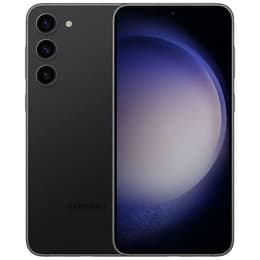


Galaxy S23+ vs Google Pixel 8 Pro

Galaxy S23+
Galaxy S23+
Starting at

Refurbished price:A$539.00

Versus A$1,953.00 new

See options
Google Pixel 8 Pro
Google Pixel 8 Pro
Starting at

Refurbished price:A$565.00

Versus A$1,859.00 new

See options

Ratings

The Samsung Galaxy S23 Plus (released February 2023) and the Google Pixel 8 Pro (released October 2023) are both prominent Android smartphones, offering distinct approaches to the premium mobile experience. While the Galaxy S23 Plus emphasizes robust hardware and a refined user interface, the Pixel 8 Pro focuses on advanced computational photography and extended software support. Both devices run on the Android operating system, though with different custom interfaces and feature sets.

Scores

Durability

When considering the long-term usability of these devices, their release timelines and software support policies are key differentiators.

  • Release Timeline: The Samsung Galaxy S23 Plus was introduced in February 2023, making it slightly older than the Google Pixel 8 Pro, which launched in October 2023. This seven-month difference impacts their respective software support cycles.
  • Software Longevity: The Pixel 8 Pro offers an extensive seven years of operating system upgrades, security updates, and feature drops, ensuring support until 2030. In contrast, the Galaxy S23 Plus is guaranteed four generations of OS upgrades and five years of security updates, meaning it will receive updates up to Android 17 and security patches until 2028. This makes the Pixel 8 Pro a more sustainable choice for users prioritizing the longest possible software lifespan.
  • Physical Durability: Both smartphones feature Corning Gorilla Glass Victus 2 on the front and back, along with an IP68 rating for dust and water resistance, indicating a similar level of physical resilience against everyday elements.

Release year

2023

2023

Compatible with latest Update

Yes

Yes

Foldable

No

No

Performance

Both the Galaxy S23 Plus and the Pixel 8 Pro deliver strong performance for daily tasks and demanding applications, though they achieve this through different hardware optimizations.

  • Processing Power: The Galaxy S23 Plus is equipped with a processor known for its consistent and reliable performance, often showing higher benchmark scores in certain tests, which translates to swift app loading and smooth navigation. The Pixel 8 Pro features a processor optimized for AI-driven tasks and computational photography, providing a responsive experience for everyday use and specialized Google features.
  • Multitasking and Responsiveness: The Pixel 8 Pro typically includes 12GB of RAM, which can be beneficial for keeping more applications open in the background without reloading. The Galaxy S23 Plus usually offers 8GB of RAM, which is generally sufficient for most users' multitasking needs. Users of both devices generally report a fluid user interface and quick responses to inputs.
  • Storage and Battery: The Galaxy S23 Plus is available with 256GB or 512GB of internal storage, utilizing faster UFS 4.0 technology. The Pixel 8 Pro offers a wider range of storage options, including 128GB, 256GB, 512GB, and a 1TB variant, though it uses UFS 3.1 storage. The Pixel 8 Pro has a larger battery capacity at 5050 mAh compared to the Galaxy S23 Plus's 4700 mAh. Despite this, real-world battery life is often comparable, with both phones generally offering reliable all-day usage for most users due to optimized power management. The Galaxy S23 Plus supports faster wired charging at 45W, while the Pixel 8 Pro supports 30W wired charging.

Memory (GB)

8 GB

12 GB

Screen quality

The visual experience on both devices is vibrant and clear, though the Pixel 8 Pro offers a slightly more advanced display.

  • Display Technology and Resolution: The Galaxy S23 Plus features a 6.6-inch Dynamic AMOLED 2X display with a 2340x1080 (FHD+) resolution. The Pixel 8 Pro has a slightly larger 6.7-inch Super Actua Display, an LTPO OLED panel, with a higher 2992x1344 (QHD+) resolution, resulting in sharper text and images.
  • Brightness and Refresh Rate: The Pixel 8 Pro's display can reach a peak brightness of 2400 nits, making it highly visible even in direct sunlight. The Galaxy S23 Plus offers a peak brightness of 1750 nits, which is also suitable for outdoor use. Both phones feature a 120Hz adaptive refresh rate for smooth scrolling and responsiveness. The Pixel 8 Pro's LTPO technology allows its refresh rate to drop as low as 1Hz for improved power efficiency, whereas the S23 Plus can go down to 48Hz.
  • Viewing Experience: The Pixel 8 Pro's higher resolution and greater peak brightness contribute to a slightly more detailed and easily viewable display, particularly in bright conditions.

Resolution

1080 x 2340

1344 x 2992

Screen type

Dynamic AMOLED 2X

LTPO OLED

Audiovisual

Both smartphones offer advanced camera systems, each with distinct strengths in capturing photos and videos.

  • Main Camera System: The Galaxy S23 Plus features a triple camera setup with a 50MP main sensor, a 12MP ultra-wide lens, and a 10MP telephoto lens with 3x optical zoom. The Pixel 8 Pro also has a triple camera system, including a 50MP main sensor, a 48MP ultra-wide lens, and a 48MP telephoto lens with 5x optical zoom. The Pixel 8 Pro's telephoto lens offers greater optical zoom capabilities.
  • Photography Performance: The Pixel 8 Pro is often praised for its computational photography, producing images with natural colors and excellent detail, especially in challenging lighting conditions. The Galaxy S23 Plus tends to produce more vibrant and saturated colors, which some users prefer for immediate sharing. For low-light photography, both perform well, though the Pixel often maintains a more neutral, sometimes slightly darker, appearance compared to the Galaxy's brighter, more processed look.
  • Video Recording and Front Camera: Both phones offer high-quality video recording, with the Galaxy S23 Plus capable of 8K video at 30fps. The Pixel 8 Pro has shown improvements in video quality and stabilization compared to previous generations. For selfies, the Galaxy S23 Plus has a 12MP front camera, while the Pixel 8 Pro features a 10.5MP front camera with autofocus.

Main camera

50 megapixels

50 megapixels

Front camera

12 megapixels

10.5 megapixels

Miscellaneous

Beyond core features, several practical elements distinguish these two smartphones in terms of connectivity, physical design, and unique sensors.

  • Connectivity and Ports: Both devices support 5G cellular connectivity and Bluetooth 5.3. The Pixel 8 Pro supports the newer Wi-Fi 7 standard, offering potential for faster wireless speeds, while the Galaxy S23 Plus supports Wi-Fi 6E. Both utilize a USB-C port for charging and data transfer.
  • Biometrics and Sensors: The Galaxy S23 Plus features an ultrasonic in-screen fingerprint sensor, which is generally considered fast and accurate. The Pixel 8 Pro uses an optical in-screen fingerprint sensor and also includes secure Face Unlock. A unique feature of the Pixel 8 Pro is a temperature sensor on its rear, though its practical utility for general users has been noted as limited.
  • Design and Handling: The Galaxy S23 Plus is slightly lighter at 196 grams and thinner at 7.6mm, which some users may find more comfortable to hold. The Pixel 8 Pro is heavier at 213 grams and thicker at 8.8mm, accommodating its larger battery and camera module. Both phones feature premium build materials, including Gorilla Glass Victus 2 on the front and back, and an IP68 rating for water and dust resistance.

Weight

196 oz

213 oz

Screen size (in)

6.6

6.7

Network

5G

5G

SIM card

Physical SIM + eSIM

Physical SIM + eSIM

Carrier compatibility

Unlocked

Unlocked

User feedback for the Samsung Galaxy S23 Plus often highlights its consistent performance, the polished One UI software experience, and robust ecosystem integration. Many users appreciate its strong battery life and sleek design. Criticisms sometimes point to its camera processing being overly saturated for some preferences.

The Google Pixel 8 Pro receives praise for its exceptional camera capabilities, particularly its computational photography and natural image rendering. Its extended software support is also a significant advantage for users planning to keep their device for many years. Some users have noted concerns regarding potential thermal management and network connectivity in previous Pixel generations, though the Pixel 8 Pro aims to address these.

Users who prioritize a long-lasting software experience, advanced AI features, and a camera system known for its natural image processing may find the Google Pixel 8 Pro well-suited to their needs. Conversely, users who value a slightly lighter and thinner device, faster wired charging, and a highly customizable user interface with vibrant photo output may lean toward the Samsung Galaxy S23 Plus. Both devices represent solid choices in the premium smartphone segment, and considering a quality-assured refurbished option for either model can be an eco-friendly alternative.


See all articles

Our recent comparisons