Galaxy A14 vs Galaxy S23 Ultra

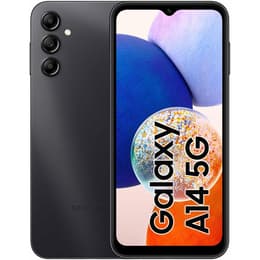
Galaxy A14
Galaxy A14
Starting at

Refurbished price:A$215.00

Versus A$390.00 new

See options
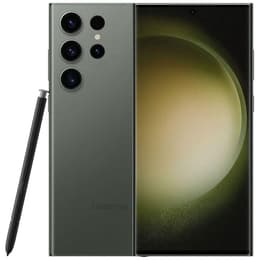
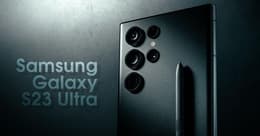
Galaxy S23 Ultra
Galaxy S23 Ultra
Starting at

Refurbished price:A$687.00

Versus A$2,288.00 new

See options

Ratings

The Samsung Galaxy A14 (released in early 2023) and the Samsung Galaxy S23 Ultra (released in February 2023) represent distinct segments within Samsung's smartphone lineup. While both operate on the Android platform, the A14 is designed as an accessible option, focusing on core smartphone functionalities, whereas the S23 Ultra is a flagship device offering advanced features and premium performance. The primary differentiators lie in their display technology, camera capabilities, and overall processing power.

Scores

Durability

The longevity of a smartphone is influenced by its build quality, software support, and the demands of evolving applications.

  • Release Timeline: The Galaxy A14 5G was launched in January 2023, with the 4G LTE model following in February 2023 [5, 8, 10, 12]. The Galaxy S23 Ultra was released in February 2023 [1, 4, 28, 33]. This means both devices are relatively current in the market.
  • Software Support: The Galaxy A14 typically receives two major Android version updates and four years of security upgrades [39]. In contrast, the Galaxy S23 Ultra benefits from Samsung's more extensive support policy, offering four years of Android updates and five years of security patches [28, 33]. Users prioritizing the longest possible software support will find the S23 Ultra offers a longer update timeline.
  • Build Durability: The Galaxy A14 features a plastic polycarbonate back and frame [39], and some users have reported concerns about its structural integrity over time, including bending issues [38]. The Galaxy S23 Ultra, on the other hand, incorporates premium materials and is protected by Corning Gorilla Glass Victus 2 on its display [17]. It also boasts an IP68 rating for dust and water resistance [9], indicating a higher level of protection against environmental elements.

Performance

Performance differences between these two devices are notable, impacting how smoothly they handle various tasks and applications.

  • Processing Power: The Galaxy A14 is equipped with an octa-core processor, such as the MediaTek Dimensity 700 or Exynos 1330/850, depending on the region and specific model [5, 8, 10, 15]. This provides adequate performance for everyday tasks like browsing, social media, and light applications. The Galaxy S23 Ultra features an optimized current-generation processor, specifically designed for Galaxy devices, which delivers significantly faster CPU and GPU speeds [4, 9, 11, 13, 29, 31, 33].
  • System Responsiveness: For the Galaxy A14, users generally report satisfactory performance for basic use, though some have noted occasional lag or app crashes when running more demanding games or multiple applications simultaneously [22, 38]. The Galaxy S23 Ultra offers a highly responsive experience, handling demanding applications, intensive multitasking, and graphic-heavy games with exceptional smoothness and efficiency [9, 13, 33, 40].
  • Storage and Multitasking: The Galaxy A14 comes with various RAM and storage configurations, including options for 4GB or 6GB of RAM and 64GB or 128GB of internal storage, expandable via microSD [8, 10, 15, 39]. The Galaxy S23 Ultra offers higher RAM options, typically 8GB or 12GB, alongside larger internal storage capacities starting from 256GB [4, 9, 28, 31]. The increased RAM in the S23 Ultra allows for more seamless multitasking and keeps more applications active in the background without performance degradation.

Memory (GB)

4 GB

8 GB

Screen quality

The visual experience is a key area where these two Samsung smartphones diverge significantly.

  • Display Technology and Clarity: The Galaxy A14 features a 6.6-inch PLS LCD display with a Full HD+ resolution (1080 x 2408 pixels) [5, 7, 16, 18, 19]. This technology provides decent visuals and good viewing angles for its class. The Galaxy S23 Ultra boasts a larger 6.8-inch Dynamic AMOLED 2X display with a Quad HD+ resolution (3088 x 1440 pixels) [1, 4, 14, 17, 20, 33]. This results in significantly sharper images, deeper blacks, and more vibrant colors, offering a more immersive viewing experience.
  • Brightness and Outdoor Visibility: The Galaxy A14's display offers good brightness for indoor use, but some reviews indicate it can be challenging to view clearly under direct sunlight [2, 16]. The Galaxy S23 Ultra features a display with a peak brightness of up to 1750 nits [1, 17, 33], ensuring excellent visibility even in bright outdoor conditions.
  • Refresh Rate and Smoothness: The Galaxy A14 5G model offers a 90Hz refresh rate, providing a smoother scrolling experience than standard 60Hz displays [5, 7, 8, 19]. The Galaxy S23 Ultra features an adaptive refresh rate that can dynamically adjust from 1Hz to 120Hz [1, 17, 33]. This adaptive technology not only delivers exceptionally smooth motion for scrolling and gaming but also helps conserve battery life by lowering the refresh rate when static content is displayed.

Audiovisual

The camera systems on the Galaxy A14 and Galaxy S23 Ultra cater to different user expectations and photographic needs.

  • Rear Camera System: The Galaxy A14 includes a triple rear camera setup, featuring a 50-megapixel main sensor, a 2-megapixel macro lens, and a 2-megapixel depth sensor [2, 3, 8, 15, 21, 35]. It notably lacks an ultrawide camera [21]. The Galaxy S23 Ultra features a versatile quad-camera system, highlighted by a 200-megapixel main sensor, a 12-megapixel ultrawide lens, a 10-megapixel telephoto lens with 3x optical zoom, and another 10-megapixel telephoto lens with 10x optical zoom [4, 9, 20, 24, 29, 31].
  • Photography Performance: In good lighting conditions, the Galaxy A14's main camera captures decent details and colors [3, 21, 35]. However, it struggles in low-light environments due to the absence of a dedicated night mode and can produce noisy images [3, 21, 35]. The Galaxy S23 Ultra excels in various lighting conditions, offering exceptional detail, dynamic range, and strong low-light performance, often referred to as 'Nightography' [24, 29, 36]. Its advanced zoom capabilities, including up to 100x digital zoom, allow for capturing distant subjects with clarity [24, 25, 34, 36].
  • Video and Front Camera: The Galaxy A14 supports video recording up to 1080p at 30 frames per second (fps) from both its rear and 13-megapixel front cameras [2, 15, 35]. The Galaxy S23 Ultra offers significantly more advanced video capabilities, including 8K video recording at 30fps, and features like enhanced image stabilization [34, 36]. Its 12-megapixel front camera also delivers sharp and colorful selfies with improved clarity and background separation [36].

Miscellaneous

Beyond core features, several practical elements differentiate these two devices in terms of user experience and functionality.

  • Connectivity Standards: The Galaxy A14 5G model supports 5G networks, along with Wi-Fi 5 and Bluetooth 5.2 [15, 19, 39]. The Galaxy S23 Ultra offers more advanced connectivity, including 5G, Wi-Fi 6E, and Bluetooth 5.3, providing faster and more stable wireless connections [1, 9, 20].
  • Ports and Sensors: The Galaxy A14 includes a USB-C port and retains a 3.5mm headphone jack, along with a side-mounted fingerprint sensor [19, 39]. The Galaxy S23 Ultra features a USB-C port but omits the traditional headphone jack. It incorporates an in-display ultrasonic fingerprint sensor for biometric security [1, 20]. A notable exclusive feature of the S23 Ultra is the integrated S Pen stylus, offering enhanced productivity and creative input [9, 13, 40].
  • Physical Characteristics: The Galaxy A14 has dimensions of approximately 167.7 x 78 x 9.1 mm and weighs around 201-202 grams [5, 15, 39]. The Galaxy S23 Ultra is slightly larger and heavier, measuring about 163.4 x 78.1 x 8.9 mm and weighing 234 grams [14, 20]. While the S23 Ultra is a substantial device, its weight distribution and design are often praised for comfortable handling despite its size [32].

Screen size (in)

6.6

6.8

Network

4G

5G

SIM card

Physical SIM

Physical SIM + eSIM

Carrier compatibility

Unlocked

Unlocked

The Samsung Galaxy A14 and Galaxy S23 Ultra cater to distinct user needs, reflecting their different positions in the smartphone market. User feedback for the Galaxy A14 often praises its long battery life, with many reporting it can last up to two days with moderate use [3, 6, 15]. Its display is generally considered good for its segment, and the main camera performs adequately in well-lit conditions [3, 21, 35]. However, common criticisms include its performance being merely adequate for demanding tasks, occasional lag, and struggles with low-light photography [22, 38]. Some users also express disappointment over the lack of an ultrawide camera and slower charging speeds [3, 21, 26].

Conversely, the Galaxy S23 Ultra receives widespread acclaim for its exceptional battery life, often lasting 1.5 to 2 days even with heavy usage, a significant improvement over previous flagship models [9, 13, 27, 41]. Its camera system, particularly the zoom capabilities and low-light performance, is frequently highlighted as a major strength [24, 29, 36]. Users also appreciate its powerful performance, vibrant display, and the versatility offered by the integrated S Pen [9, 13, 40]. Criticisms are less frequent but sometimes mention its large size and weight, which might not suit all users [9, 32, 40]. Some users have also noted occasional shutter lag with the 200MP camera setting [30].

Users prioritizing extended battery life, a capable main camera for everyday shots, and essential smartphone functions will find the Galaxy A14 well-suited to their needs. It serves as a practical device for communication and general media consumption. For those who require top-tier performance for demanding applications, an advanced and versatile camera system with exceptional zoom, a stunning and bright display, and the added productivity of a stylus, the Galaxy S23 Ultra is the more appropriate choice. Both devices offer reliable Android experiences, and for those considering a quality-assured refurbished option, both models are available, providing an eco-friendly alternative to purchasing new.


See all articles

Our recent comparisons