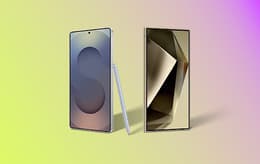
Galaxy S25 Ultra vs Motorola Edge 30 Fusion

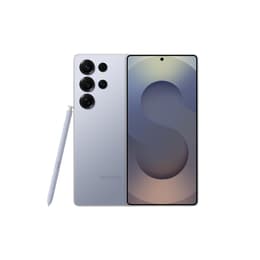
Galaxy S25 Ultra
Galaxy S25 Ultra
Starting at

Refurbished price:A$1,122.00

Versus A$2,149.00 new

See options
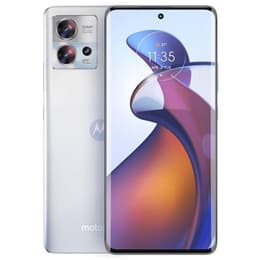
Motorola Edge 30 Fusion
Starting at

Refurbished price:A$257.46

Versus A$1,352.00 new

See options

The Samsung Galaxy S25 Ultra, released in February 2025, and the Motorola Edge 30 Fusion, launched in September 2022, represent different generations and market segments within the smartphone landscape. While both operate on the Android platform, the Galaxy S25 Ultra offers a more recent and advanced feature set, particularly in processing power and camera technology, reflecting its flagship status and newer release. The Motorola Edge 30 Fusion, on the other hand, provides a balanced experience with a focus on design and display quality from its release year.

Scores

Durability

When considering the long-term usability of these devices, their respective release timelines and software support policies are key factors.

  • Software Longevity: The Samsung Galaxy S25 Ultra benefits from an extensive software support policy, promising seven years of Android operating system upgrades and security updates, extending its viability until approximately 2032. In contrast, the Motorola Edge 30 Fusion, released in 2022, received two major OS upgrades (up to Android 14) and three years of security patches, with security updates likely concluding around April 2025. This difference means the Galaxy S25 Ultra will receive new features and security enhancements for a significantly longer period.
  • Practical Lifespan: The Galaxy S25 Ultra's extended software support directly translates to a longer practical lifespan, allowing users to access the latest Android features and maintain security for many years. The Edge 30 Fusion, while still functional, will gradually see its software become outdated, potentially limiting compatibility with newer applications and exposing it to unpatched vulnerabilities over time.
  • Build Durability: Both devices feature robust builds. The Galaxy S25 Ultra incorporates Gorilla Glass Armor for enhanced screen protection. The Motorola Edge 30 Fusion uses Gorilla Glass 5 for its front and back panels, offering a good level of scratch and drop resistance for its generation.

Release year

2025

2022

Operating system

Android

Android

Foldable

No

No

Performance

The performance capabilities of these smartphones are largely influenced by their internal components and the generational gap between their releases.

  • Processing Power: The Samsung Galaxy S25 Ultra is equipped with a current-generation processor designed for high-end performance, enabling smooth operation for demanding applications, intensive multitasking, and advanced gaming. Users can expect rapid app loading and seamless transitions. The Motorola Edge 30 Fusion, featuring a processor from 2021, handles everyday tasks and most applications efficiently. However, during prolonged heavy use, such as extended gaming sessions, some users have reported that the device can experience thermal warming.
  • Multitasking and Responsiveness: With its typically higher RAM configurations (12GB or 16GB), the Galaxy S25 Ultra provides ample headroom for keeping numerous applications open simultaneously without performance degradation. The Edge 30 Fusion, commonly available with 8GB of RAM, offers solid multitasking for typical usage but may show limitations when managing a very large number of active background processes.
  • Storage Options: The Galaxy S25 Ultra offers a range of storage capacities, including 256GB, 512GB, and 1TB, catering to users with extensive storage needs. The Motorola Edge 30 Fusion typically comes with 128GB of internal storage, which is suitable for many users, though it lacks expandable storage options.

Memory (GB)

12 GB

8 GB

Screen quality

Both devices offer high-quality displays, but they differ in technology and specifications, impacting the visual experience.

  • Display Technology and Clarity: The Samsung Galaxy S25 Ultra features a 6.9-inch Dynamic AMOLED display with a high resolution of 3120x1440 pixels (QHD+), providing exceptional sharpness and vibrant colors. The Motorola Edge 30 Fusion sports a 6.55-inch pOLED display with a 2400x1080 pixel (FHD+) resolution, offering clear visuals and deep blacks.
  • Brightness and Refresh Rate: The Galaxy S25 Ultra's display can reach a peak brightness of up to 2,600 nits, ensuring excellent visibility even in bright outdoor conditions, and features a 120Hz refresh rate for smooth scrolling and animations. The Edge 30 Fusion also provides a smooth experience with its 144Hz refresh rate and can achieve a peak brightness of 1100 nits, which is suitable for most viewing environments.
  • Viewing Experience: The larger, higher-resolution screen of the Galaxy S25 Ultra is well-suited for immersive media consumption and detailed work. Its anti-reflective matte coating also enhances outdoor usability. The Edge 30 Fusion's curved pOLED display offers an engaging visual experience, though some users have noted potential for unwanted screen reflections in direct light due to the curved edges.

Resolution

1440x3120

1080 x 2400

Audiovisual

The camera systems on these devices reflect their different design philosophies and target user experiences.

  • Rear Camera System: The Samsung Galaxy S25 Ultra features a versatile quad-camera setup, including a 200-megapixel main sensor, a 50-megapixel ultrawide camera, a 50-megapixel telephoto lens with 5x optical zoom, and a 10-megapixel telephoto lens with 3x optical zoom. This configuration provides extensive flexibility for various photographic scenarios, from wide landscapes to distant subjects. The Motorola Edge 30 Fusion has a triple-camera system with a 50-megapixel main sensor with optical image stabilization (OIS), a 13-megapixel ultrawide lens that also functions for macro shots, and a 2-megapixel depth sensor.
  • Photography Performance: The Galaxy S25 Ultra delivers detailed and vibrant photos, with its advanced processing improving over time to offer more balanced colors and realistic skin tones. Its zoom capabilities are particularly noted for their versatility. The Edge 30 Fusion's main camera performs well in good lighting conditions, capturing good detail and contrast. Its night mode has been praised for impressive results. However, its ultrawide camera's low-light performance is less consistent, and the absence of a dedicated telephoto lens means digital zoom is relied upon for distant subjects.
  • Video Recording and Front Camera: Both phones are capable of high-resolution video recording. The Galaxy S25 Ultra supports 8K video at 30 frames per second, offering professional-grade video capture features. It also has a 12-megapixel front camera. The Edge 30 Fusion can also record 8K video from its main camera and features a 32-megapixel front camera with autofocus, which captures detailed selfies in good lighting.

Miscellaneous

Beyond core performance and display, several practical features differentiate these two smartphones.

  • Connectivity and Ports: Both devices support 5G connectivity, ensuring access to fast mobile networks. The Galaxy S25 Ultra includes modern Wi-Fi standards and Bluetooth for wireless connections. The Motorola Edge 30 Fusion also offers current Wi-Fi and Bluetooth standards. Both utilize a USB-C port for charging and data transfer. The Edge 30 Fusion notably lacks a 3.5mm headphone jack.
  • Biometric Security: For secure unlocking, the Galaxy S25 Ultra features an advanced in-display fingerprint sensor and face recognition. The Motorola Edge 30 Fusion also incorporates an under-display fingerprint sensor, which is responsive and convenient.
  • Design and Handling: The Galaxy S25 Ultra maintains a premium build with refined ergonomics, described as lighter and more comfortable to hold than its predecessor. It also integrates the S Pen stylus for enhanced productivity. The Edge 30 Fusion boasts a thin and light design, often featuring a glass or vegan leather back and an aluminum frame, contributing to a premium feel. Its IP52 rating provides basic dust and splash resistance.

Weight

218 oz

168 oz

Screen size (in)

6.9

6,55

Network

5G

5G

SIM card

Physical SIM + eSIM

Dual Physical SIM

Carrier compatibility

Unlocked

Unlocked

User sentiment for the Samsung Galaxy S25 Ultra often highlights its comprehensive flagship experience, with many appreciating its overall completeness despite some criticisms regarding incremental hardware updates. Its excellent display, robust performance, and versatile camera system are frequently praised. However, some users have noted concerns about the stability of its processor under heavy load, the removal of certain S Pen features, and camera processing that can sometimes lead to oversaturated images.

The Motorola Edge 30 Fusion is generally lauded for its attractive design, vibrant OLED display, and solid performance for its class. Users often appreciate its near-stock Android experience and fast charging capabilities. Common criticisms include its less consistent low-light camera performance, the absence of wireless charging, and thermal warming during intensive tasks.

Users prioritizing long-term software support, cutting-edge performance, and a highly versatile camera system with advanced zoom capabilities will find the Samsung Galaxy S25 Ultra well-suited to their needs. Its integrated stylus also appeals to those requiring precise input and productivity features. Conversely, users seeking a stylish device with a smooth display and reliable everyday performance, without the need for the absolute latest generational advancements or extensive software longevity, may lean toward the Motorola Edge 30 Fusion. For those considering either device, exploring quality-assured refurbished options can provide an eco-friendly alternative.

See all articles

Our recent comparisons